Wayward Pines by Blake Crouch: the dizzying depths of a fragmented reality
In the flourishing landscape of contemporary thrillers, certain works manage to transcend the boundaries of their genre to take us to unexpected territories. The Wayward Pines trilogy by Blake Crouch, author of the excellent Dark Matter and the equally memorable Recursion, unquestionably belongs to these hybrid creations that begin as a conventional mystery before tipping us into far more disturbing dimensions.
A classic starting point that conceals abysses
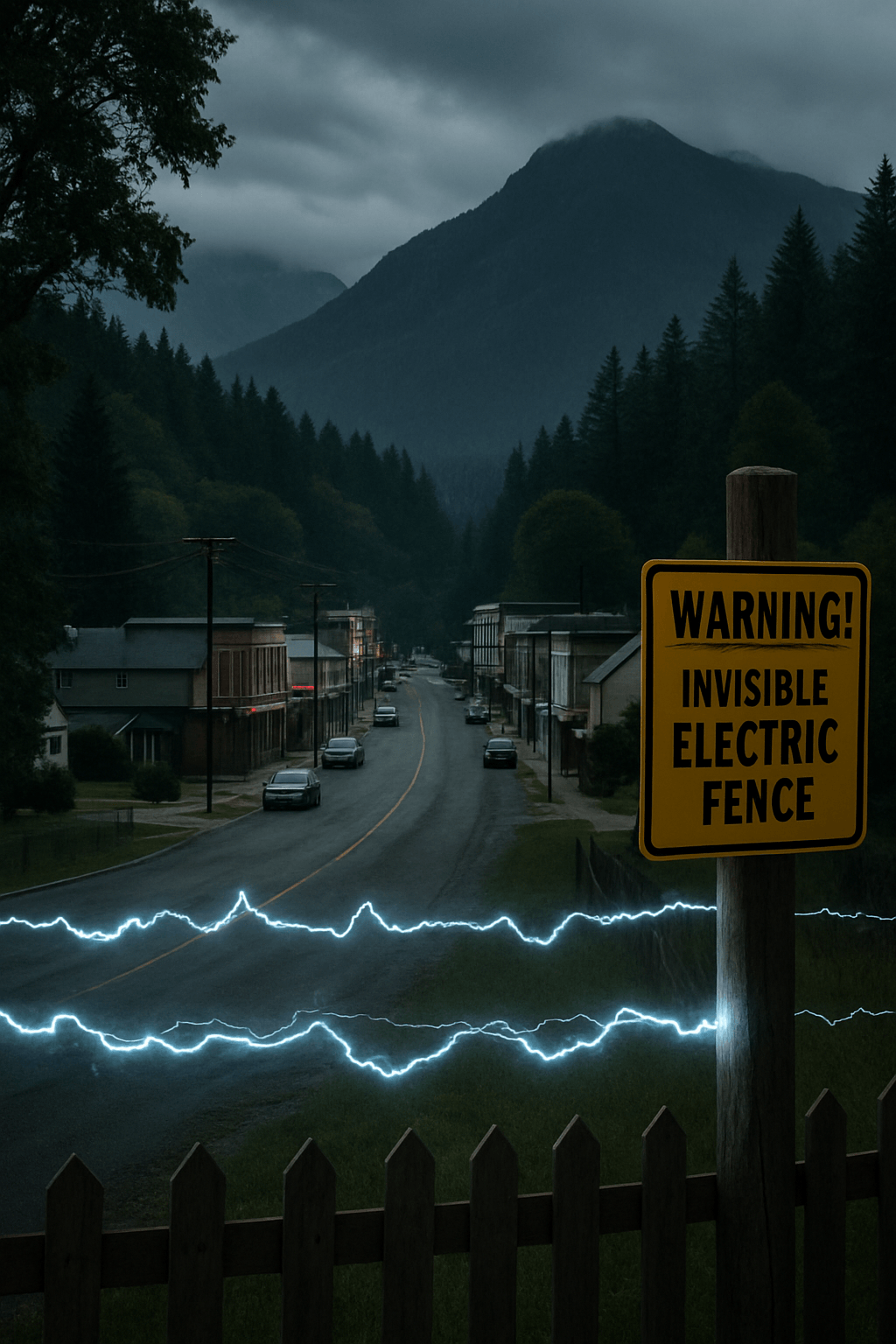
The story begins in an almost archetypal way for a thriller: Secret Service agent Ethan Burke wakes up, disoriented, in the idyllic small town of Wayward Pines after a car accident. His initial mission? To find two missing federal agents. But very quickly, something feels wrong in this seemingly perfect community. It’s impossible to contact the outside world. The inhabitants seem to be playing a role. And anyone who tries to escape is punished in spectacular and deadly fashion.
What begins as an investigation in the vein of Twin Peaks mysteries gradually transforms into a much more ambitious exploration. Crouch manages to maintain a delicate balance between the breathless suspense of a thriller and the existential questioning of speculative science fiction.
A narrative construction in service of disorientation
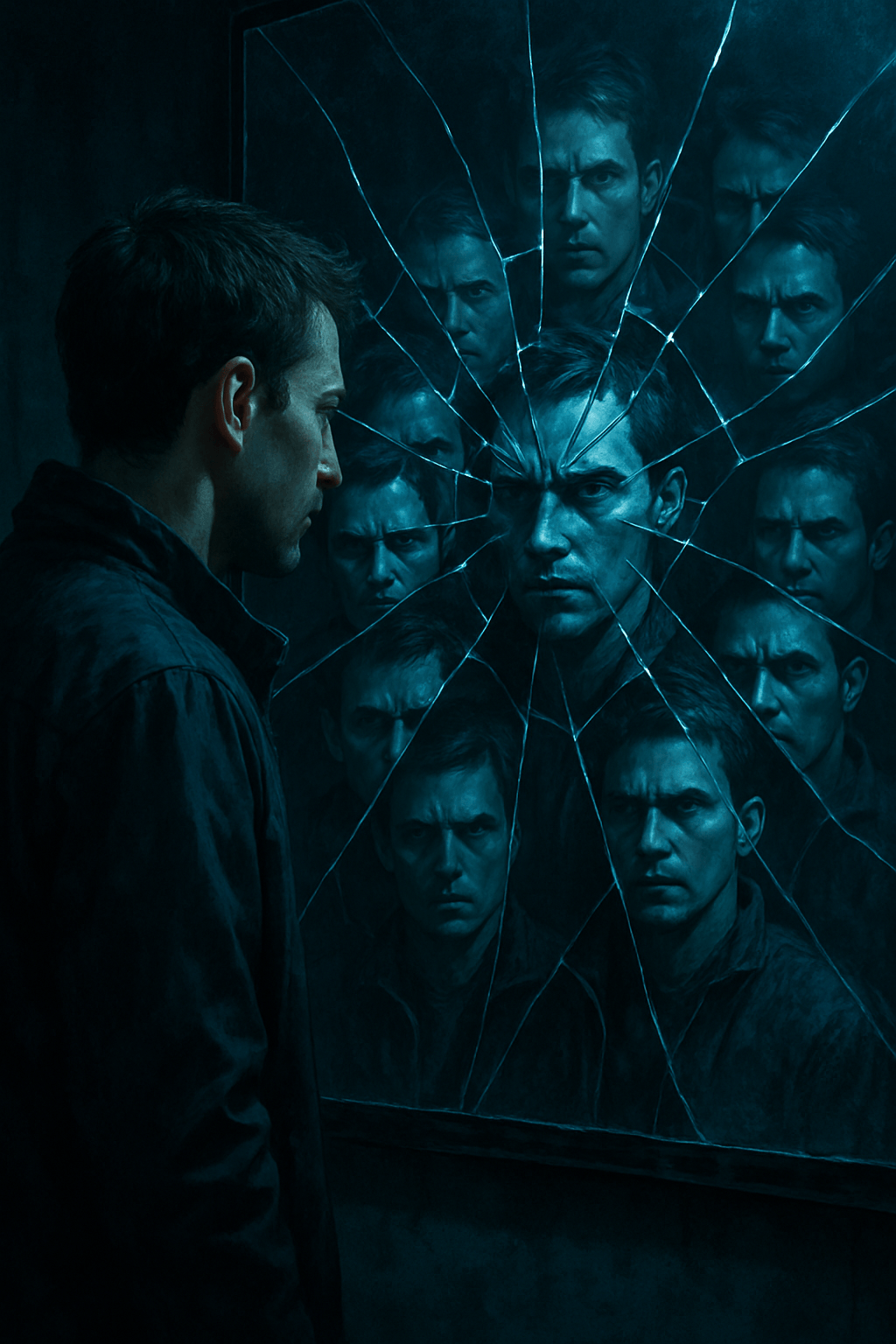
Crouch’s strength lies in his ability to make us share Ethan Burke’s confusion. The first volume, Pines, is constructed like a narrative labyrinth where the reader, just like the protagonist, desperately seeks to understand the rules governing this claustrophobic universe. The author skillfully uses short chapters, with a sustained rhythm, that move us forward in fits and starts, as if we ourselves were running through the streets of this prison-town.
The central revelation, which occurs toward the end of the first volume, constitutes one of the most audacious twists in recent genre literature. Without spoiling the plot, let’s simply say that Crouch manages to transform what could have been just a simple paranormal thriller into a meditation on human nature, species survival, and the necessary sacrifices in the face of extinction.
Characters trapped in impossible dilemmas
While Ethan Burke serves as our anchor in this disconcerting universe, it’s the gallery of secondary characters that gives Wayward Pines its depth. Sheriff Pope, whose joviality hides a chilling brutality. Kate Hewson, Ethan’s former partner, who seems to have accepted Wayward Pines’ strange reality. And especially David Pilcher, an ambivalent figure whose motivations oscillate between messianism and a twisted form of altruism.
Each character embodies a different response to the extraordinary situation in which they find themselves. Some adapt, others resist, many descend into madness. Through these different trajectories, Crouch questions our capacity for adaptation when facing an unbearable truth and the moral compromises we’re willing to make to survive.
The second volume, Wayward, expands this exploration by following a resistance movement within the town, while The Last Town pushes the protagonists to their final limits when the precarious balance of their world threatens to collapse.

A dystopia that resonates with our contemporary anxieties
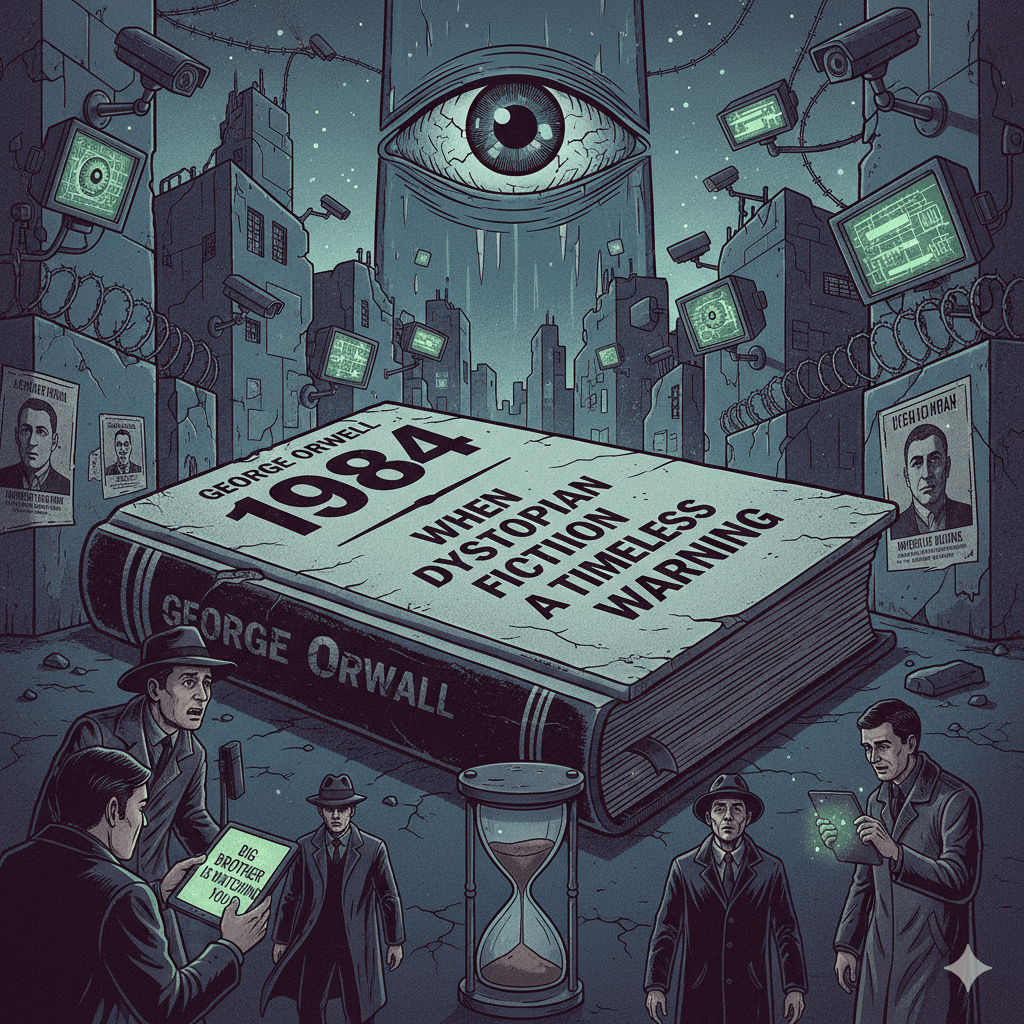
If Wayward Pines fascinates us so much, it’s because Crouch addresses themes deeply rooted in our current concerns. The omnipresent surveillance, embodied by the cameras that spy on every corner of the town, echoes our worries about privacy in the digital age. The forced isolation of inhabitants recalls the fragmentation of our modern societies. And the existential threat looming over humanity resonates with our ecological anxieties.
More subtly, the trilogy questions our relationship with truth and information control. In Wayward Pines, lies are institutionalized as a means of social preservation, a problematic that finds troubling echoes in our era of “post-truth.”
An effective style in service of immersion
Blake Crouch’s style is recognizable among all others: short sentences, often fragmented, that create a breathless rhythm. Vivid but never superfluous descriptions. Sharp dialogue. This stylistic economy, which the author perfected in his later works like Dark Matter or Recursion, perfectly serves the urgency of the narrative.
Certain passages of Wayward Pines achieve an almost cinematic intensity, notably the escape scenes or confrontations with the “aberrations” that prowl beyond the town’s walls. It’s no coincidence that the series was adapted for television by M. Night Shyamalan, as Crouch’s prose already evokes striking images.
Between thriller, science fiction, and existential horror
One of Wayward Pines’ major achievements is its refusal to be categorized. While the work borrows the thriller’s rhythm and mysteries, science fiction’s speculative concepts, it also draws from horror for some of its most memorable sequences. This hybridization sometimes recalls Stephen King’s work in his most ambitious novels, where the supernatural serves as a prism to explore human flaws.
The way Crouch manipulates time in his narration already announces his future preoccupations with temporal paradoxes and alternate realities. Wayward Pines can thus be seen as the first installment of a broader exploration of the limits of reality that the author would pursue in his later novels.
A conclusion that refuses easy solutions
Without revealing the trilogy’s ultimate developments, it must be noted that Crouch refuses the facility of a conventional ending. The choices facing the characters remain ambiguous until the end, and the “resolution” raises as many questions as it resolves. This moral ambivalence may constitute the work’s greatest strength: in the universe of Wayward Pines, there are no perfect solutions, only painful compromises.
This approach distinguishes Crouch from many thriller authors who favor the immediate satisfaction of a neat conclusion. Here, the ethical questions raised continue to resonate long after the last page is turned.
A lasting impact on the literary landscape
Initially published between 2012 and 2014, the Wayward Pines trilogy helped redefine the possibilities of the contemporary thriller by integrating elements of ambitious science fiction. The work paved the way for other hybrid narratives that refuse generic constraints, like Justin Cronin’s The Passage or certain novels by Tana French that blend police investigation with psychological exploration.
The television adaptation
The trilogy was adapted into a television series that aired on Fox from 2015 to 2016 over two seasons. Produced and directed by M. Night Shyamalan (for several episodes of the first season), the show stars Matt Dillon as Ethan Burke, alongside Carla Gugino, Melissa Leo, Toby Jones, and Terrence Howard. The first season follows the plot of the first novel relatively faithfully, preserving the central mystery and its stunning revelation. The second season, however, ventures into original territory, exploring the consequences of the events from the first season with a time jump and new characters. Despite mixed reviews for its second season, the series succeeded in translating the oppressive atmosphere and paranoid tension of Crouch’s novels to the screen, while reaching a much wider audience than the books alone.
Conclusion: a transformative reading experience
Wayward Pines is a reading experience that transforms our perception. Like the inhabitants of this impossible town, the reader is confronted with a revelation that forces them to reconsider everything they thought they knew. This ability to make us doubt our most fundamental certainties is the hallmark of great works of the imagination.
Blake Crouch created with this trilogy a universe that continues to haunt the mind long after reading, inviting us to reflect on our own relationship with truth, community, and the sacrifices we would be willing to make in the face of extinction. In a world confronting very real existential crises, these questions resonate with particular acuity.
If you’ve never visited Wayward Pines, prepare yourself for an experience from which you won’t emerge unscathed—but from which you’ll certainly emerge transformed.