Russian Cyrillic alphabet: complete guide for beginners
LESSON 1: THE LETTERS М, А, Т, К, О
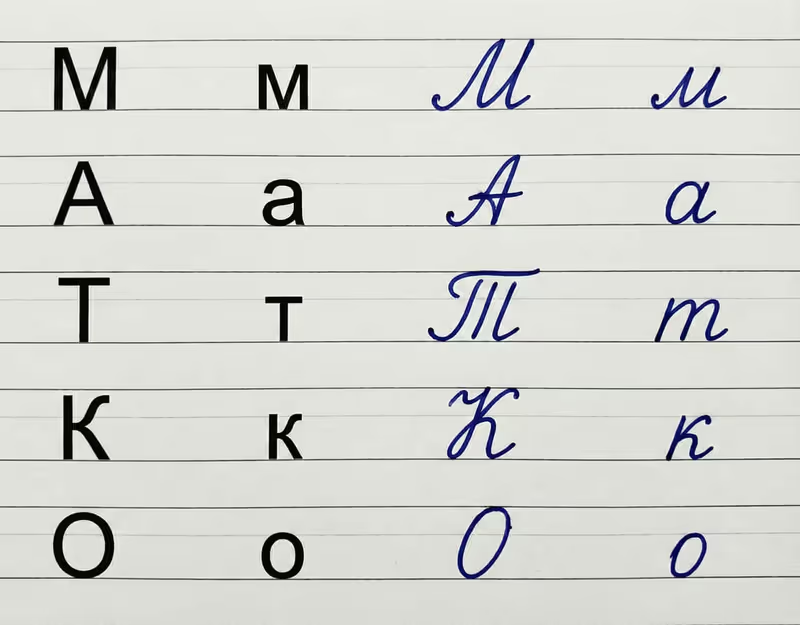
The Russian alphabet has 33 letters. To avoid learning everything at once, we start with a small group of 5 very frequent letters that we already know in English: М, А, Т, К, О. Examples: а́том, кака́о.
In Russian, every word has a stressed syllable. This characteristic is fundamental because the location of the stress is essential for correct pronunciation. However, this stress is generally not systematically marked in everyday texts – whether newspapers, novels, or emails.
On the other hand, in learning textbooks, all words (except monosyllables) are accompanied by the stressed syllable to allow learners to acquire correct pronunciation from the start and memorize the stress location for each word, which is crucial for mastering the Russian language.
Thus, when the letter О is stressed, it is pronounced [o], but when it doesn’t have the stress, it is pronounced [a]. We then say that the vowel is “reduced”: it becomes weaker or changes sound. This is what we call vowel reduction.
Examples: in the word а́том, the stress is on the letter -a, so the letter -o will be pronounced almost like the sound [a] and more weakly.
If a word has only one syllable (ex. том, кот), the vowel is always stressed. In this case, О will always be pronounced [o].
📋 LETTERS М, А, Т, К, О
| Letter | Sound | Example | Translation |
|---|---|---|---|
| М м | [m] | ма́ма | mom |
| А a | [a] | там | over there |
| Т т | [t] | том | tome |
| К к | [k] | кот | cat |
| О o | [o] [a] unstressed | ко́ма а́том | coma atom |
📚 EXAMPLES
ма́ма = mom
кот = cat
кака́о = cacao
том = tome, volume
а́том = atom
тот = that one
ко́ма = coma
там = over there
как = like, how
кто = who
📌 TO REMEMBER
- О is pronounced [o] only when it’s stressed, otherwise more weakly and somewhat like the sound [a].
- The stress (´) completely changes the pronunciation.
- If a word has only one syllable, the vowel necessarily carries the stress.
LESSON 2: THE LETTERS С, Н, Е
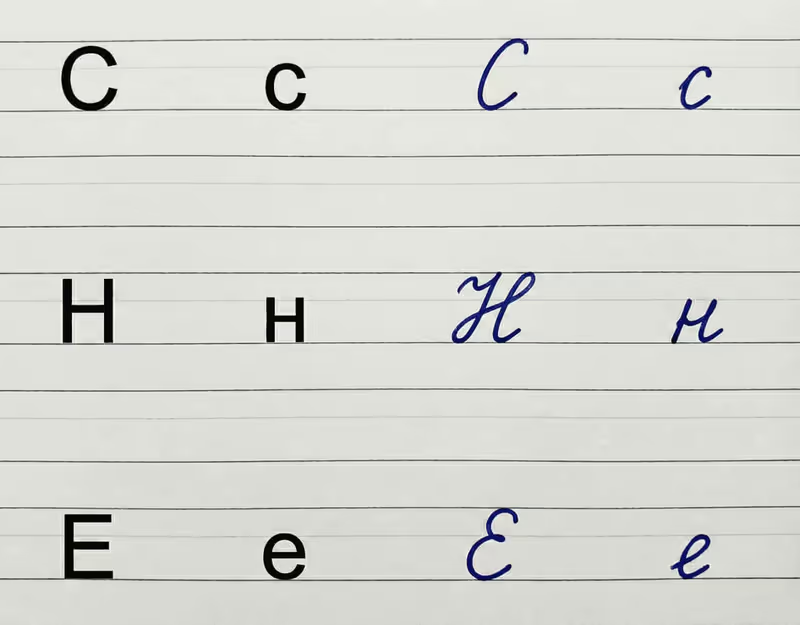
📋 PRONUNCIATION
| Letter | Sound | Russian Example | Translation |
|---|---|---|---|
| С c | [s] | сто | hundred |
| Н н | [n] | А́нна | Anna |
| Е e | [ye] | коме́та | comet |
📚 EXAMPLES WITH С
сок = juice
сто = hundred
ма́ска = mask
ка́ска = helmet
ма́сса = mass
ко́смос = cosmos
тост = toast
ко́кос = coconut
📚 EXAMPLES WITH Н
он = he
нос = nose
сон = dream
тон = tone
но́та = note
сосна́ = pine
А́нна = Anna
то́нна = ton
📚 EXAMPLES WITH Е
нет = no
ме́сто = place
стена́ = wall
те́ма = theme
сек = second
коме́та = comet
мо́ре = sea
нео́н = neon
сена́т = senate
Reminder: in Russian, vowels are pronounced differently depending on whether or not they carry the stress.
The vowel О is pronounced clearly [o] when it’s stressed, but when it’s not stressed, it “reduces” and is pronounced almost [a]. For example, for сосна́ (pine) and коме́та (comet), the unstressed о is pronounced [a].
The letter E follows the same pattern: unstressed, it is pronounced more weakly and somewhat like the sound [i]. Examples: сена́т (senate), стена́ (wall).
📌 TO REMEMBER
- С = [s], never a [k] sound.
- Н = [n], identical to English.
- Е = [e] if stressed or for single-syllable words (Example: нет) but pronounced almost [i] if unstressed.
LESSON 3: THE LETTERS Р, У, Х
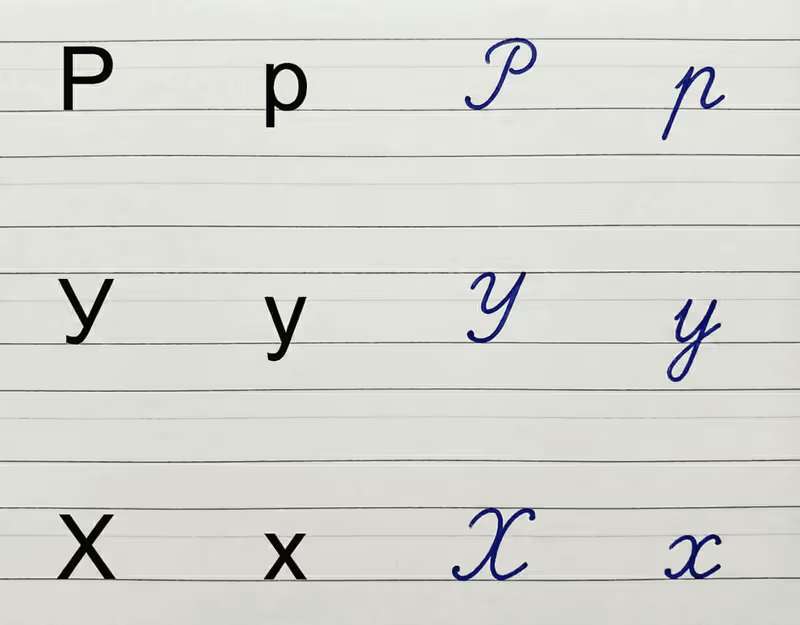
📋 PRONUNCIATION
| Letter | Sound | English Example |
|---|---|---|
| Р p | [r] rolled | / |
| Y y | [oo] | Food |
| Х x | [kh] guttural | / |
Р = rolled [r]. This is a sound that doesn’t exist in standard English, but is found in Spanish or Italian. You make the tongue vibrate against the palate. У = [oo]. It’s a clear and open sound, like in “food”. Х = [kh]. This is a guttural sound that doesn’t exist in English. It resembles the Spanish “j” in José or the German “ch” in Bach.
📚 EXAMPLES WITH Р
рот = mouth
торт = cake
метро́ = metro
се́ктор = sector
мото́р = motor
тре́нер = trainer
роса́ = dew
📚 EXAMPLES WITH У
тур = tour, trip
сук = branch
рука́ = hand
у́тро = morning
уро́к = lesson, homework, class
у́тка = duck
тума́н = fog
📚 EXAMPLES WITH Х
у́хо = ear
му́ха = fly
су́хо = dry
охо́та = hunt
мона́х = monk
хор = choir
We again see the importance of stress. Examples: охо́та (hunt), роса́ (dew), мото́р (motor), the stress falls on the second syllable. The unstressed О tends to be pronounced [a], and so we pronounce [akhóta], [rasá], [matо́r].
📌 TO REMEMBER
- Р is pronounced rolled (like in Spanish or Italian).
- У = [oo]
- Х = guttural sound, close to Spanish j (José) or German ch (Bach).
LESSON 4: THE LETTERS И, Л, В
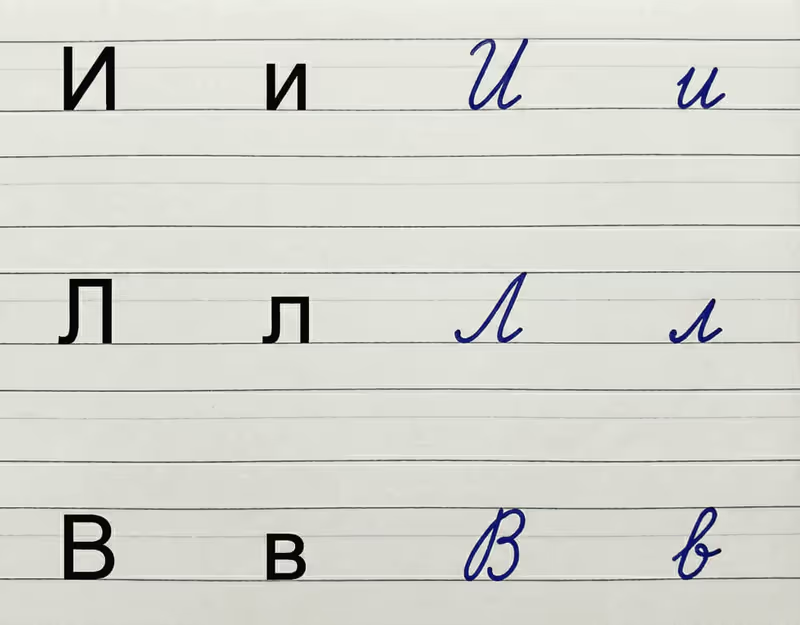
📋 PRONUNCIATION
| Letter | Sound | English Example |
|---|---|---|
| И и | [i] | Letter I in “Machine” |
| Л л | [l] | Letter L in “Light” |
| В в | [v] | Letter V in “Voice” |
📚 EXAMPLES WITH И
кит = whale
тир = shooting range
мир = world, peace
ри́тм = rhythm
Ива́н = Ivan
такси́ = taxi
кино́ = cinema
риск = risk
📚 EXAMPLES WITH Л
луна́ = moon
сто́л = table
е́сли = if
село́ = village
лес = forest
лист = leaf
ле́то = summer
литр = liter
класс = class
молоко́ = milk
📚 EXAMPLES WITH В
вот = here is
ве́тер = wind
вино́ = wine
во́лк = wolf
весна́ = spring
восто́к = east
век = century
сове́т = advice
📌 TO REMEMBER
- И = clear [i], never like “in” in English.
- Л is similar to English “L”.
- В = voiced [v], close to English “v”.
LESSON 5: THE LETTERS Д, Б, Г
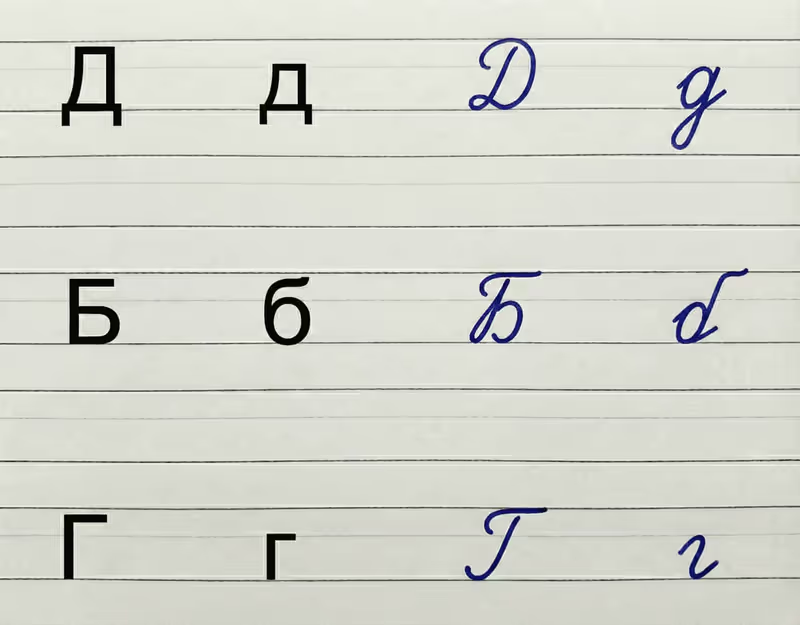
📋 PRONUNCIATION
| Letter | Sound | English Example |
|---|---|---|
| Д д | [d] | Letter D in “Dog” |
| Б б | [b] | Letter B in “Book” |
| Г г | [g] | Letter G in “Go” |
📚 EXAMPLES WITH Д
да = yes
дом = house
сосе́д / сосе́дка = neighbor (m/f)
студе́нт / студе́нтка = student (m/f)
де́ти = children
де́ло = matter
дру́г = friend
вода́ = water
📚 EXAMPLES WITH Б
хлеб = bread
соба́ка = dog
борода́ = beard
беда́ = trouble
биле́т = ticket
банк = bank
обе́д = lunch
📚 EXAMPLES WITH Г
где = where
го́род = city
гора́ = mountain
голова́ = head
го́лос = voice
год = year
гриб = mushroom
Д, Б, Г are voiced consonants. They keep their [d], [b], [g] sound before a vowel or another voiced consonant.
However, at the end of a word or before a voiceless consonant, these voiced consonants become devoiced and are pronounced like their voiceless equivalents: д becomes [t], б becomes [p], and г becomes [k].
Examples: The word хлеб (bread), which ends with -б, is pronounced [xlep]. The word год (year), which ends with -д, is pronounced [got].
📌 TO REMEMBER
- Д, Б, Г are voiced consonants.
- Devoicing (loss of voicing) of these letters in certain positions.
LESSON 6: THE LETTERS З, П, Ф
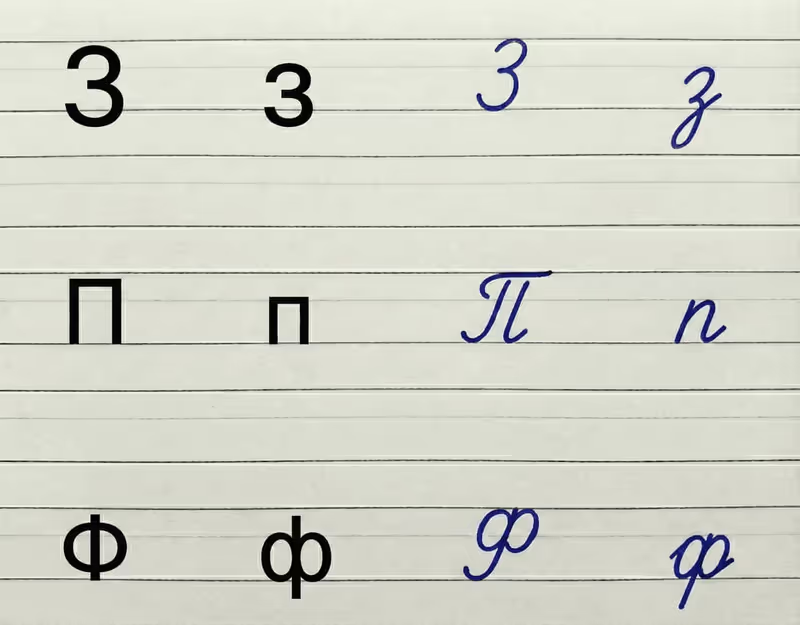
📋 PRONUNCIATION
| Letter | Sound | English Example |
|---|---|---|
| З з | [z] | Letter Z in “Zero” |
| П п | [p] | Letter P in “Papa” |
| Ф ф | [f] | Letter F in “Film” |
In final position or before a voiceless consonant, the letter з can sometimes be pronounced like [s] (it becomes voiceless). The example of the Russian word газ (“gas”) is typical: even though the spelling contains the letter з, at the end of the word, this consonant becomes voiceless and is pronounced like [s], so [gas].
📚 EXAMPLES WITH З
вокза́л = train station
глаз = eye
звезда́ = star
зи́ма = winter
зо́лото = gold
зда́ние = building
📚 EXAMPLES WITH П
па́па = papa
по́ле = field
парк = park
план = plan
пото́м = then
по́сле = after
пра́вда = truth
📚 EXAMPLES WITH Ф
фо́то = photo
фи́рма = company
фо́рма = form
флаг = flag
фрукт = fruit
футбóл = football, soccer match
📌 TO REMEMBER
- З = [z], always voiced, except at the end of a word or before a voiceless consonant where it becomes [s]
- П = clear [p], never aspirated like in English
- Ф = [f] identical to English
- These letters open up many transparent (international) words
LESSON 7: THE LETTERS Ж, Ш, Ч
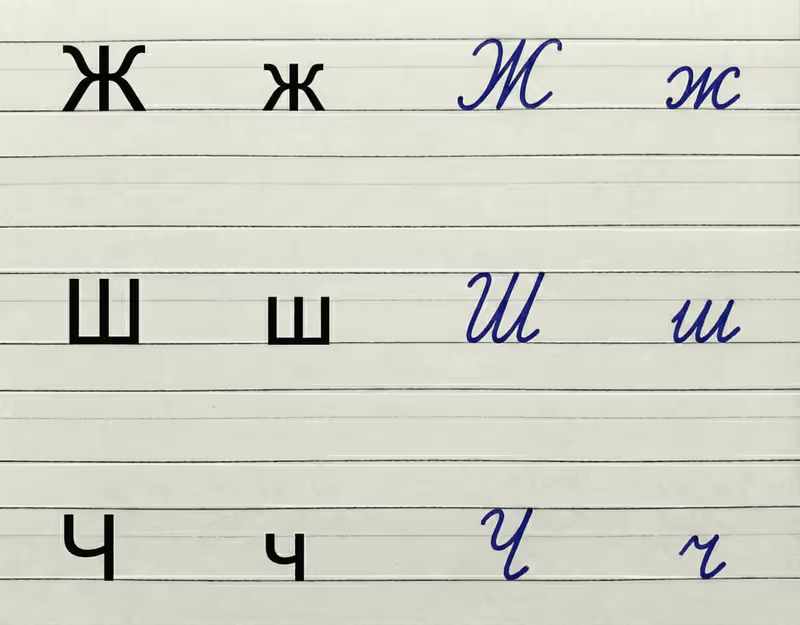
📋 PRONUNCIATION
| Letter | Sound | English Example |
|---|---|---|
| Ж ж | [ʒ] | Letters S in “pleasure” |
| Ш ш | [ʃ] | Letters SH in “shoe” |
| Ч ч | [t͡ʃ] | Letters CH in “chair” |
📚 EXAMPLES WITH Ж
муж = husband
жена́ = wife
нож = knife
пирожо́к = small typical pastry
дру́жба = friendship
оде́жда = clothing
📚 EXAMPLES WITH Ш
шко́ла = school
де́душка = grandfather
ба́бушка = grandmother
хорошо́ = well
ваш = your
каранда́ш = pencil
📚 EXAMPLES WITH Ч
час = hour
число́ = number
ча́сто = often
чу́до = miracle
вpaч = doctor
по́чта = postal service, mail
📌 TO REMEMBER
- Ж = [ʒ], voiced like the S in pleasure
- Ш = [ʃ], hard like [sh] in English
- Ч = [t͡ʃ], brief like [ch] in English
LESSON 8: THE LETTERS Ц, Ы, Й
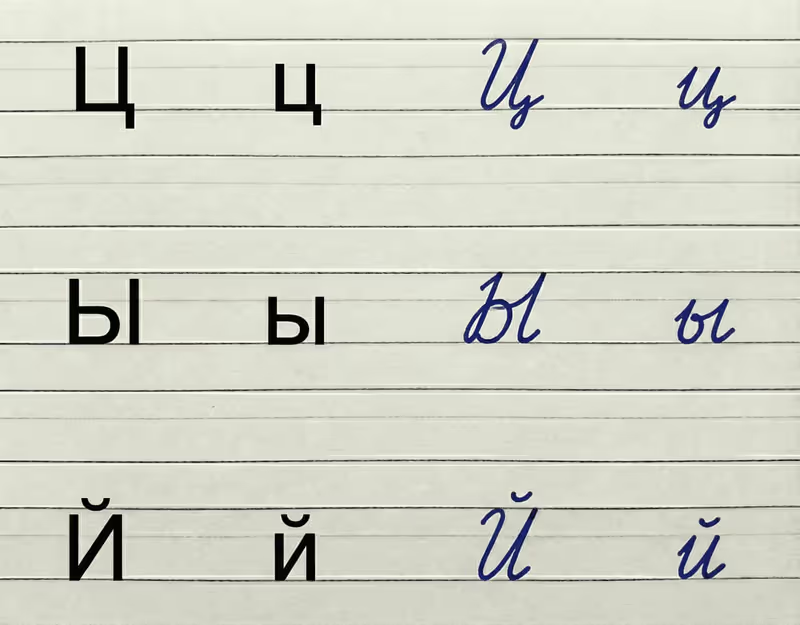
📋 PRONUNCIATION
| Letter | Sound | English Example |
|---|---|---|
| Ц ц | [ts] | Letters TS in “cats” |
| Ы ы | [ɨ] | Sound between i and oo |
| Й й | [j] | Letter Y in “yes” |
📚 EXAMPLES WITH Ц
цирк = circus
со́лнце = sun
ко́нцерт = concert
у́лицa = street
📚 EXAMPLES WITH Ы
сын = son
ды́м = smoke
сы́р = cheese
кры́ша = roof
📚 EXAMPLES WITH Й
чай = tea
май = May
музе́й* = museum
но́вый* = new
ру́сский = Russian
геро́й = hero
ка́ждый = each
пожа́луйста = please
📌 TO REMEMBER
- Ц = [ts], always crisp, even at the end of a word
- Ы = unique sound, neither i nor u, to be well distinguished
- Й = short sound similar to y in English
LESSON 9: THE LETTERS Щ, Ь, Э
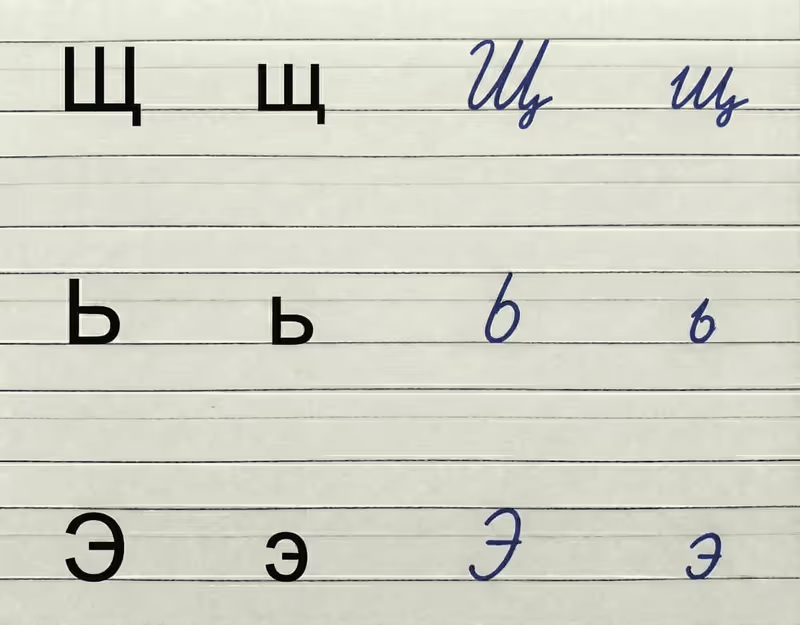
📋 PRONUNCIATION
| Letter | Sound | English Example |
|---|---|---|
| Щ щ | [ɕː] | Long and soft “sh” sound |
| Ь ь | — | No sound, softens |
| Э э | [è] | Letter E in “bed” |
📚 EXAMPLES WITH Щ
щу́ка = pike
щётка = brush
📚 EXAMPLES WITH Ь (Soft Sign)
день = day
учи́тель = teacher
пи́сьмо = letter
быть = to be
здесь = here
дочь = daughter
ночь = night
пло́щадь = square
фестива́ль = festival
📚 EXAMPLES WITH Э
э́то = this
поэ́т = poet
экра́н = screen
эта́ж = floor
📌 TO REMEMBER
- Щ = unique Russian sound, softer than Ш
- Ь (soft sign) is not heard, but changes the pronunciation of the preceding consonant. The soft sign is also used in many numbers.
- Э = clear vowel [è], different from Е
- Э́то = “this, it is”
LESSON 10: THE LETTERS Ю, Я, Ё
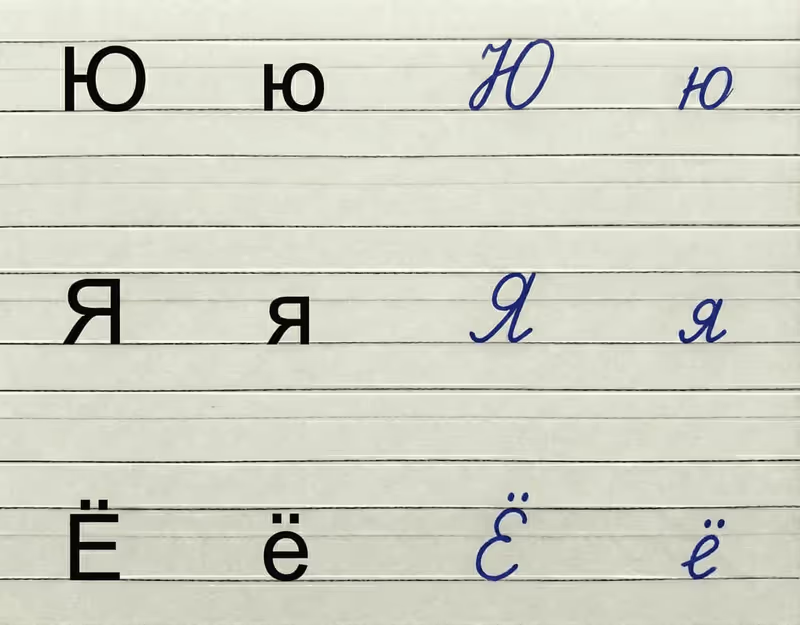
📋 PRONUNCIATION
| Letter | Sound | English Example |
|---|---|---|
| Ю ю | [you] | Letters YOU in “you” |
| Я я | [ya] | Letters YA in “yard” |
| Ё ё | [yo] | Letters YO in “York” |
📚 EXAMPLES WITH Ю
лю́ди = people
любо́вь = love
плюс = plus
компью́тер = computer
я рабо́таю = I work
📚 EXAMPLES WITH Я
я = I
моя́ = my
Росси́я = Russia
язы́к = language
семья́ = family
ку́хня = kitchen
неде́ля = week
земля́ = earth
вре́мя = time
я́блоко = apple
📚 EXAMPLES WITH Ё
ёлка = Christmas tree
лёд = ice
мёд = honey
ещё = still
ёж = hedgehog
LESSON 11: THE HARD SIGN Ъ AND THE COMPLETE ALPHABET
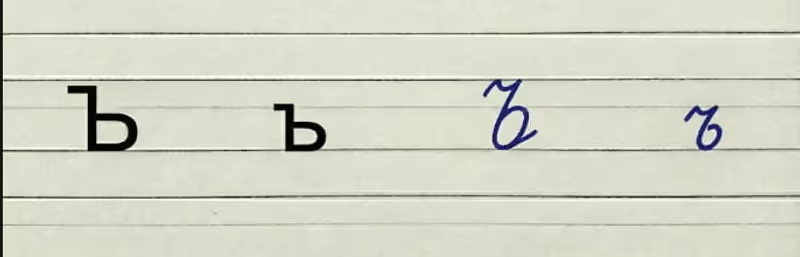
🎯 THE HARD SIGN
Ъ = this letter is called the “hard sign” and is not pronounced! Its only function is to create a clear separation between the consonant that precedes it and the vowel that follows it.
The hard sign is thus used to force the vowels е, ё, ю, я to keep their initial [y] sound, their “complete” sound.
📚 EXAMPLES WITH Ъ
объе́кт = object
съезд = congress
подъе́зд = building entrance
📌 TO REMEMBER
- Ъ is never pronounced
- Serves to separate two sounds for more clarity
- Always before Е, Ё, Ю, Я
📚 SUMMARY: THE CYRILLIC ALPHABET
Complete Russian alphabet (33 letters): А Б В Г Д Е Ё Ж З И Й К Л М Н О П Р С Т У Ф Х Ц Ч Ш Щ Ъ Ы Ь Э Ю Я
- Vowels (10): А Е Ё И О У Ы Э Ю Я
- Consonants (21): Б В Г Д Ж З Й К Л М Н П Р С Т Ф Х Ц Ч Ш Щ
- Special signs (2):
-
Ъ (hard sign)
-
Ь (soft sign)
 Russian for Beginners A1
📚 HARD / SOFT VOWELS
In Russian, vowels are divided into two categories:
1. Hard vowels: А, О, У, Э, Ы
These vowels indicate that the consonant that precedes them is pronounced in a strong and unmodified way, as in English.
2. Soft vowels: Я, Е, Ё, Ю, И
These vowels have a very important role: they indicate that the consonant that precedes them must be softened or palatalized. This means that you must press the middle of your tongue against the palate at the same time as you pronounce the consonant.
📚 VOICED / VOICELESS CONSONANTS
In Russian, certain voiced consonants become voiceless at the end of a word or before a voiceless consonant.
Consonants are divided into two large groups: voiced consonants and voiceless consonants. The difference is simple: voiced consonants use the vocal cords (you feel a vibration in your throat when you pronounce them), while voiceless consonants don’t use them.
Here is the list of the consonants involved and their voiceless correspondence:
- The consonant б (like in Book) is voiced. Its voiceless consonant is п (like in pen).
- The consonant в (like in Voice) is voiced. Its voiceless consonant is ф (like in fire).
- The consonant г (like in Go) is voiced. Its voiceless consonant is к (like in cat).
- The consonant д (like in Dog) is voiced. Its voiceless consonant is т (like in tea).
- The consonant ж (like in pleasure) is voiced. Its voiceless consonant is ш (like in shoe).
- The consonant з (like in Zero) is voiced. Its voiceless consonant is с (like in sun).
At the end of a word, these voiced consonants are pronounced like their voiceless equivalent. For example, газ is pronounced [гас], друг is pronounced [друк].
This rule also applies inside the word: a voiced consonant becomes voiceless before a voiceless consonant.