Ivan the Terrible: the Oprichnina, when a brilliant reformer descended into terror
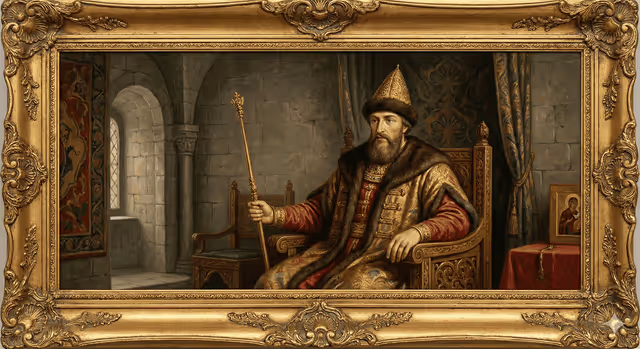
In 1547, a sixteen-year-old had himself crowned “tsar of all Russia” in the Cathedral of the Dormition in the Kremlin. Eighteen years later, that same man created the Опри́чнина (oprichnina), a political police force that would terrorise his own kingdom for seven years. How did Ivan IV Vasilyevich transform Muscovy into a modern centralised state while also establishing one of the most brutal regimes of terror of the 16th century?
The coronation that changed everything (January 1547)
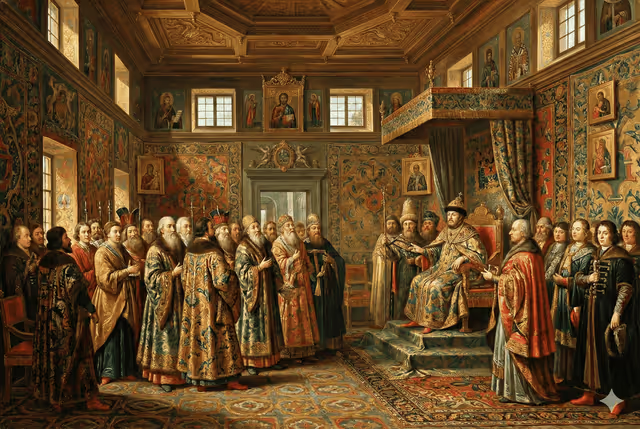
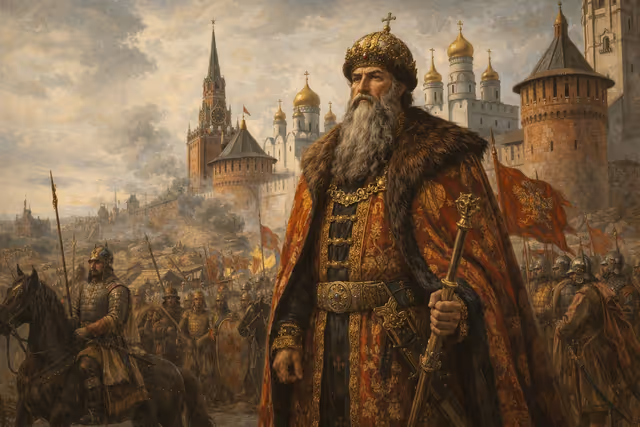
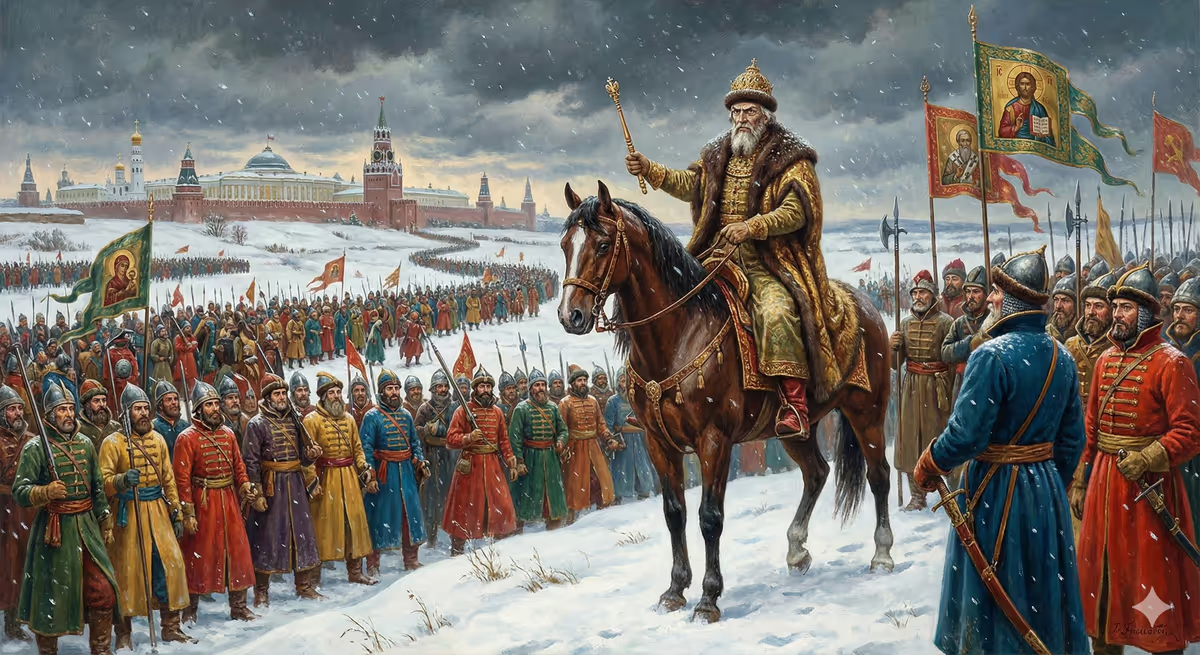
On 16 January 1547, Ivan Vasilyevich took a revolutionary step. In the Cathedral of the Dormition (Успе́ние) in Moscow, Metropolitan Macarius (Макáрий) did not crown him as “grand prince” — the traditional title of Muscovite sovereigns — but as tsar (царь), derived from the Latin “caesar”. This choice was far from insignificant. Ivan thus claimed a symbolic lineage with the Byzantine emperors and placed himself above the Russian princes who, until then, had considered him merely a primus inter pares.
The young sovereign had grown up in an environment of violence and intrigue. Orphaned of his father at three, he watched helplessly as the bloody struggles between the Shuisky (Шу́йские) and Belsky (Бе́льские) families raged for control of power. These traumatic years forged in him a visceral mistrust of the boyar aristocracy (бояре, the great nobles).
The reforms of the Chosen Council (1549–1560)
After his coronation, Ivan surrounded himself with a circle of reforming advisers, the Chosen Council (Избра́нная Рада́). Alexei Adashev (Алексе́й Ада́шев), of minor noble origin, and the priest Sylvester (Сильве́стр) became his principal collaborators. Together, they undertook a radical modernisation of the Muscovite state.
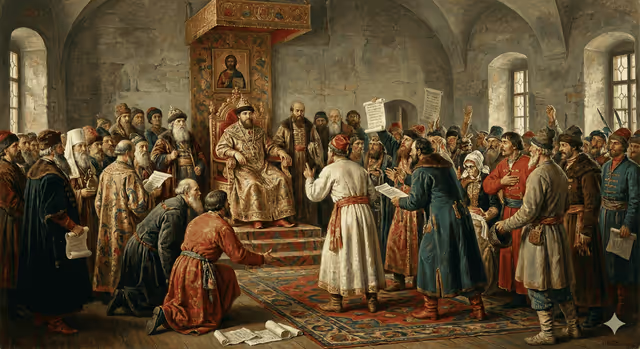
In 1550, Ivan promulgated the Sudebnik (Судéбник), a new code of laws limiting the abuses of local governors and establishing clearer judicial procedures. The following year, he convoked the first Zemsky Sobor (Земский собóр, “Assembly of the Land”), an institution bringing together boyars, clergy, merchants and urban representatives. This innovation allowed the tsar to bypass the traditional aristocracy by creating a new base of political support.
The military reform proved even more decisive. Ivan created the streltsy (стрельцы́), the first permanent infantry corps armed with muskets, recruited from townspeople and paid directly by the royal treasury. These units, which would reach 12,000 men in the 1550s, depended on no boyar and swore loyalty to the tsar alone.
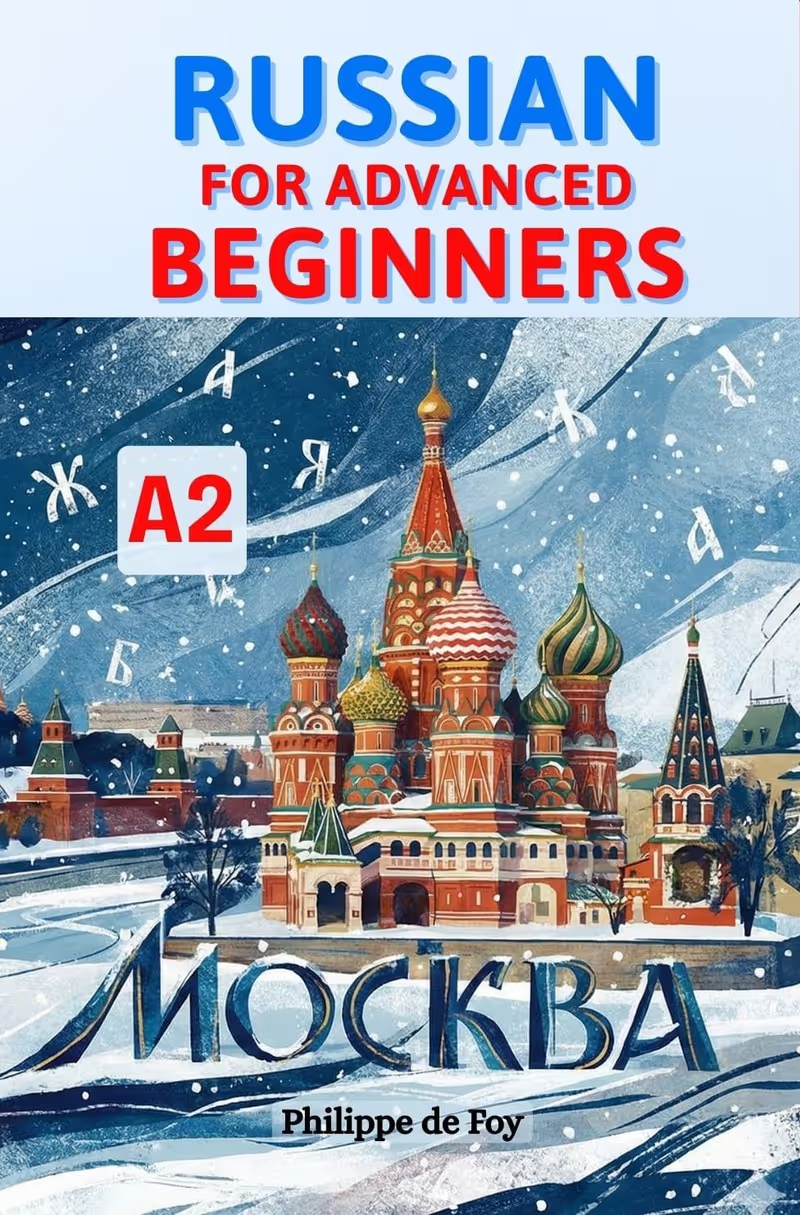
Victories followed. In 1552, after a six-week siege, Kazan fell. Four years later, Astrakhan surrendered. The Volga, from north to south, became Russian. Ivan commissioned the construction of Saint Basil’s Cathedral on Red Square to celebrate these conquests.
The turning point: the death of Anastasia (August 1560)
On 7 August 1560, Tsarina Anastasia Romanovna (Анастаси́я Рома́новна) died at thirty in circumstances that immediately fuelled rumours of poisoning. Ivan, who had maintained with her an exceptionally affectionate relationship for the time, descended into a grief that tipped into paranoia. Contemporary historians such as Andrei Kurbsky — then still close to the tsar — testified to a radical change in his behaviour.
In the months that followed, Ivan brutally dismissed Adashev and Sylvester. The former was sent into exile in Livonia, where he died in suspicious circumstances in 1561. The latter ended his days in a northern monastery. The tsar became convinced that his former advisers had conspired to kill Anastasia. This conviction, likely delusional, marked the beginning of a descent into systematic mistrust.
In April 1564, Kurbsky, military governor in Livonia and one of Russia’s most brilliant generals, fled to Lithuania. From there, he sent Ivan a stinging letter denouncing the arbitrary execution of numerous boyars. The betrayal of his former comrade-in-arms confirmed Ivan in his paranoia: the entire aristocracy was conspiring against him.
The creation of the Oprichnina (December 1564–January 1565)
On 3 December 1564, Ivan abruptly left Moscow with his family, his treasures and his favourite icons. He settled at Alexandrovskaya Sloboda, a hundred kilometres north-east of the capital. From there, he sent two messages. The first, addressed to the metropolitan and the boyars, accused them of treason and announced his abdication. The second, intended for the people of Moscow, affirmed that he bore them no grudge and was withdrawing only because of the nobility’s perfidy.
The manoeuvre was diabolically calculated. Panicked at the thought of losing their legitimate sovereign and fearing chaos, Muscovites begged Ivan to return. A delegation led by Metropolitan Athanasius (Афанáсий) went to Alexandrovsk. Ivan agreed to resume the throne, but on one condition: the power to punish traitors at his discretion and to reorganise the state as he saw fit. The delegates, trapped, agreed.
In January 1565, Ivan instituted the Oprichnina (Опри́чнина). The term, derived from opritche (о́прич, “apart”), traditionally designated the portion of inheritance reserved for a widow. Ivan co-opted this concept to create a personal domain separate from the rest of the kingdom, the Zemshchina (Земщи́на). The Oprichnina comprised the richest lands: regions around Moscow, commercial routes to the North, the towns of Vyazma and Kozelsk, and several districts of the capital itself.
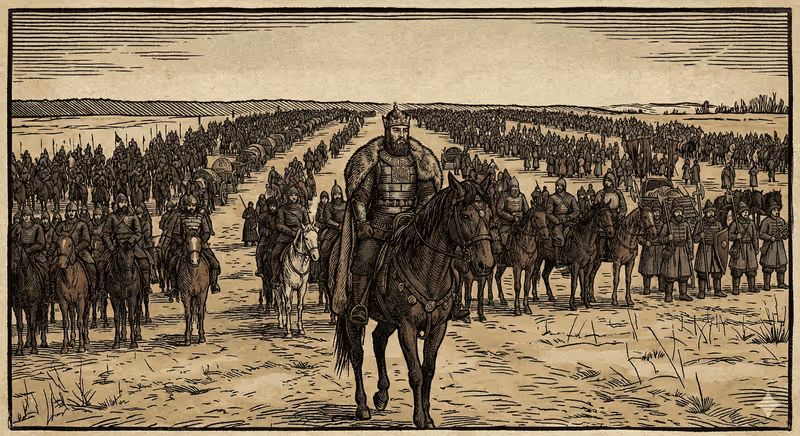
To administer and defend this domain, Ivan recruited the oprichniki (опри́чники), who would become notorious. These men, initially numbering one thousand and later growing to six thousand, took a terrible oath: to renounce their family ties, serve only the tsar, and denounce any conspiracy. They wore black uniforms and attached to their saddles a dog’s head and a broom — symbols of their mission: to bite the tsar’s enemies and sweep away treachery.
Terror descends on Russia (1565–1572)
The Oprichnina was not long in showing its true face. In 1568, Metropolitan Philip (Фили́пп), former abbot of the Solovetsky Islands Monastery (Солове́цкие острова́), dared to publicly denounce the oprichniki’s abuses. In the Cathedral of the Dormition, he refused to bless Ivan and accused him of having turned Russia into a “kingdom of terror”.
The tsar’s response was brutal. Philip was arrested, tried for heresy in a travesty of a trial, deposed and confined to a monastery in Tver (Тве́рь). In December 1569, an oprichnik, Malyuta Skuratov — Ivan’s right-hand man and the very symbol of terror — strangled him in his cell.
But it was Novgorod (Но́вгород) that suffered the most horrifying punishment. In January 1570, convinced that this free commercial city of 30,000 inhabitants was conspiring with Poland, Ivan marched on it at the head of 15,000 oprichniki. The massacre lasted five weeks. The chronicles, even accounting for possible exaggeration, describe systematic slaughter. The oprichniki pillaged churches, tortured notables to extort their wealth, and drowned entire families in the Volkhov River (Волхо́в). Ivan personally supervised some of the executions.
On his return to Moscow in February 1570, the tsar organised a new spectacular purge. On Red Square, he had eighteen scaffolds erected. Hundreds of people — boyars, officials, merchants — were tortured and executed. Some were boiled alive, others cut to pieces. Ivan, dressed in black, watched the spectacle with his sons and the oprichniki.
The terror struck at random. Ivan Fyodorovich Mstislavsky (Иван Фёдорович Mсти́славский), the tsar’s cousin and a respected military commander, was forced to take monastic vows. Prince Vladimir Andreyevich (Влади́мир Андре́евич), Ivan’s first cousin and potential heir, was probably poisoned on the tsar’s orders in 1569.
The collapse and abolition (1571–1572)
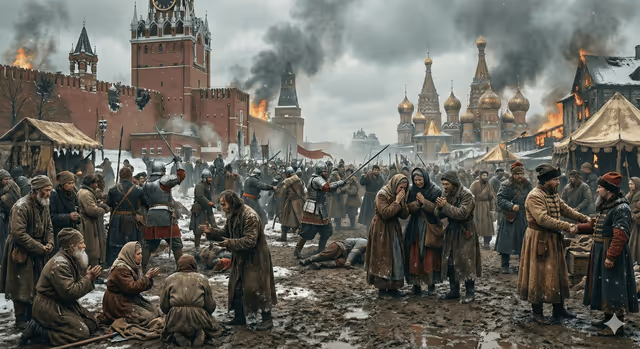
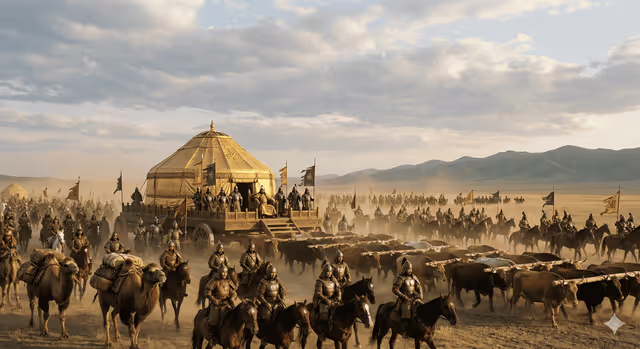
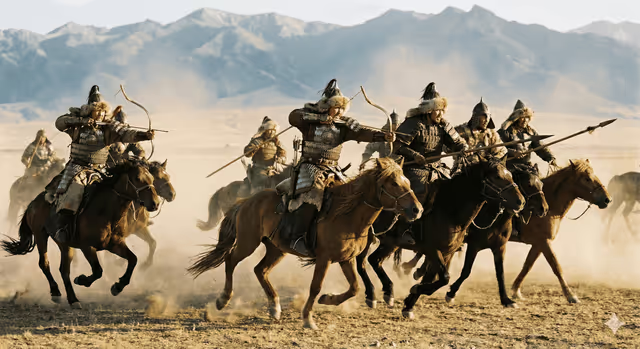
The Oprichnina ultimately revealed its catastrophic ineffectiveness during the Tatar invasion of 1571. The Khan of Crimea (крымский хан), Devlet Giray (Девле́т-Гире́й), broke through Russian defences and reached Moscow. The oprichniki, excellent at terrorising unarmed civilians, proved incapable of defending the kingdom. The capital burned almost entirely; only the Kremlin survived.
The following year, a new Tatar army invaded Russia. This time, Ivan had to call upon the regular forces of the Zemshchina, commanded by generals he had humiliated. On 30 July 1572, at the Battle of Molodi (Мóлоди), fifty kilometres south of Moscow, the Tatars were crushed. The victory went to the streltsy and the traditional army, not the oprichniki.
A few months later, in September 1572, Ivan officially abolished the Oprichnina. He even forbade the word to be spoken under pain of corporal punishment. The lands were in theory returned to the Zemshchina, though many remained in the tsar’s personal domain. Most oprichniki were integrated into the regular army or local administrations.
A contradictory legacy
When Ivan died on 18 March 1584, he left a profoundly transformed state. The title of tsar was henceforth uncontested. The central administration had developed with the prikazy (приказы́), specialised chancelleries. The power of the boyars had been permanently broken — the old Muscovite aristocracy never truly recovered.
But the price of these transformations was staggering. Thousands of people had been killed. Entire regions had been devastated. The system of pomestia (поме́стья, conditional domains granted to the tsar’s servants in exchange for military service), which was meant to create a new class of loyal servants, produced economic chaos. Peasants fled en masse from lands exhausted by requisitions, accelerating the drift toward serfdom that would be codified in the following century.
The Oprichnina itself, though abolished, established a terrifying precedent: the idea that a parallel state power, above the law, could be legitimate to defend the sovereign against real or imagined enemies. Seven years of terror had engraved in Russian memory this possibility: a regime of systematic suspicion where denunciation becomes a virtue and loyalty is measured by cruelty.
Ivan IV did indeed create the modern Muscovite autocracy. But he founded it as much on the administrative reforms of his youth as on the mass executions of his mature years. The Russian tsardom was thus born marked by this duality: a will to modernise coupled with a paranoid mistrust of any limitation on absolute power.