Alexander Nevsky: the prince who saved Orthodoxy by allying with the Mongols
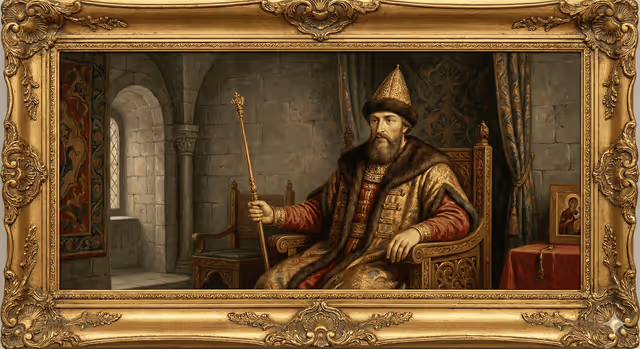
Alexander Yaroslavich (Алекса́ндр Яросла́вич) was born in 1221 in a small town a hundred kilometres north-east of Moscow. He grew up in a world that was fracturing: Kievan Rus’, once powerful and united, had fragmented into rival principalities where princes spent their time fighting one another over inheritances and titles. At thirteen, Alexander was given his first charge: to govern Novgorod.
A saint who knelt before pagans
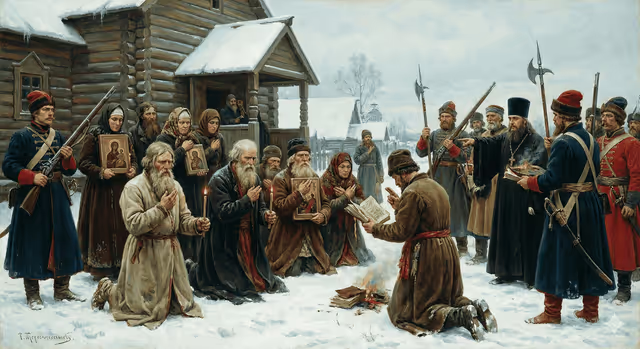
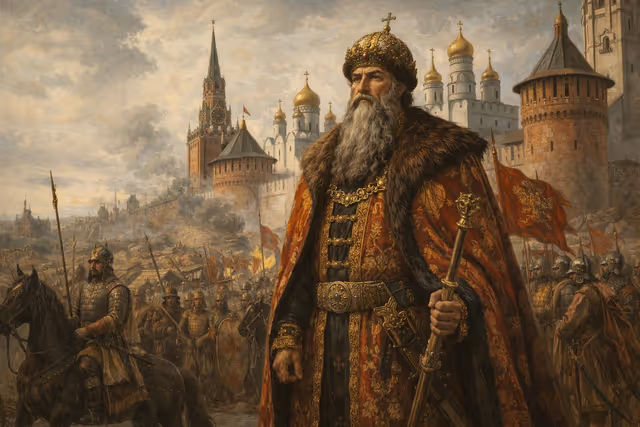
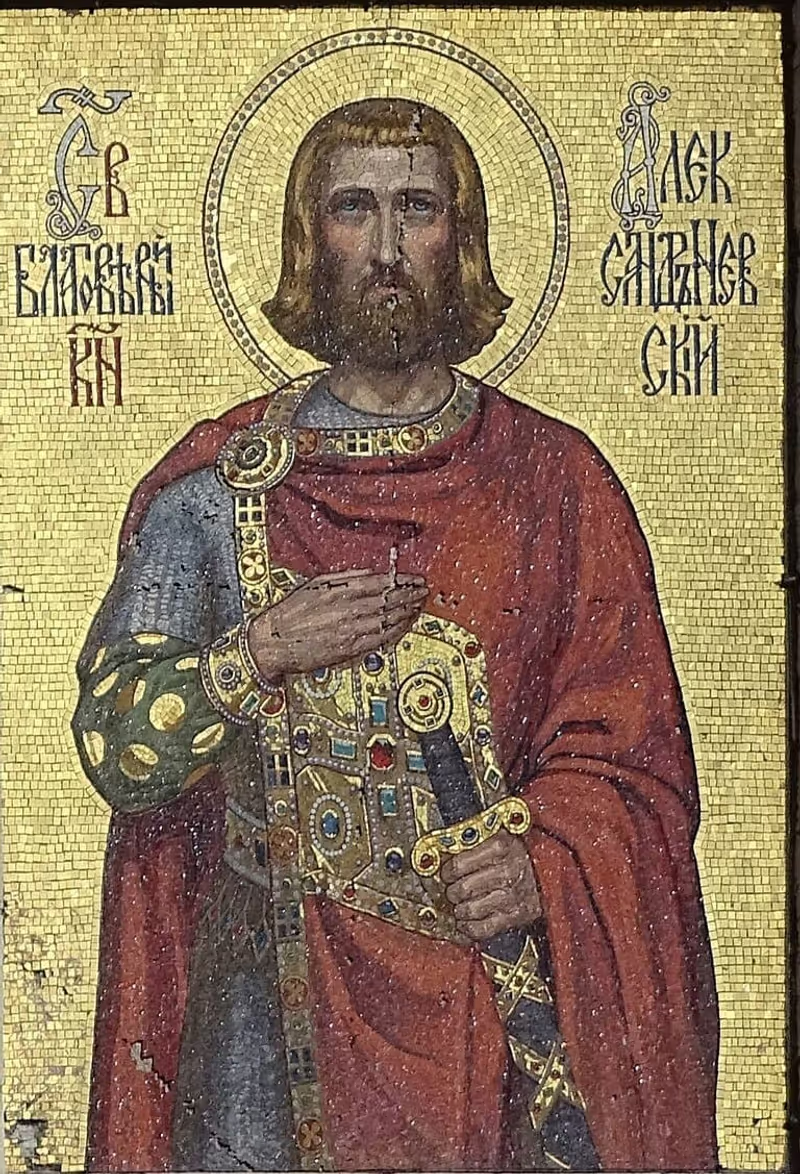
In 1547, the Russian Orthodox Church canonised a prince of the 13th century. Nothing extraordinary, except that this saint never founded a monastery, never lived as a hermit, and never even left any spiritual writings. Alexander Nevsky (Алекса́ндр Не́вский) owed his sainthood to military victories… and to a systematic policy of submission to the Mongol conquerors of the Golden Horde. The paradox is troubling: how does a man who regularly bowed before “pagan” khans become the embodiment of Russian resistance? The answer lies in one sentence: facing two invaders, Nevsky chose the one that threatened his people’s identity least.
1240–1242: Rus’ caught in a vice
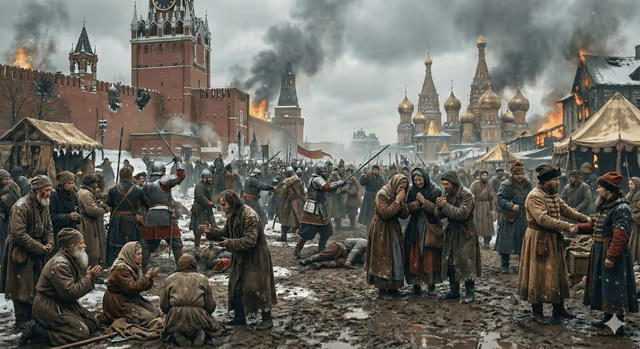
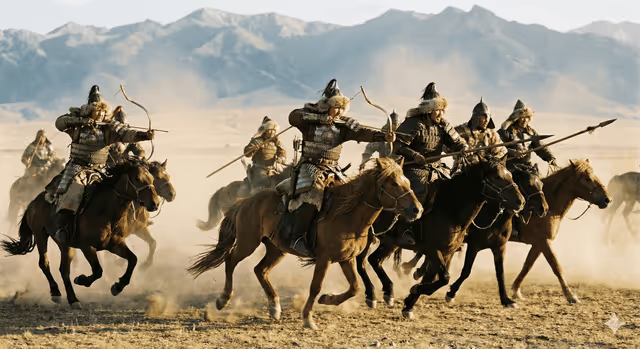
In 1240, the principality of Novgorod (Но́вгород) found itself caught between two fires. To the east, the Mongol wave had just razed Kiev, the “mother of Russian cities”. Batu Khan’s (Баты́й) troops had reduced the capital of Kievan Rus’ to ashes and massacred its population. Chronicles speak of pyramids of skulls and churches burned with their faithful inside. To the west, Swedish and Germanic knights of the Teutonic Order saw in the Mongol chaos an opportunity: to subjugate the Orthodox Russian principalities to Rome and extend Latin Christianity eastward.
Alexander Yaroslavich (Алекса́ндр Яросла́вич), barely twenty, had ruled Novgorod since 1236. His father Yaroslav (Яросла́в) governed the principality of Vladimir (Влади́мир), theoretically the most powerful of the Russian lands. Theoretically only, for Vladimir had just suffered the Mongol passage and its real power was almost nil. Young Alexander quickly understood that he had to choose his enemy.
Western victories: building a legend
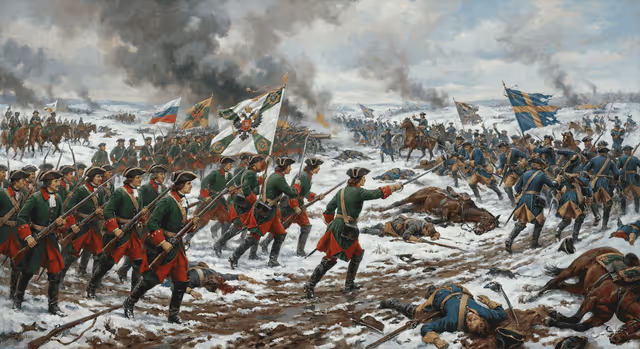
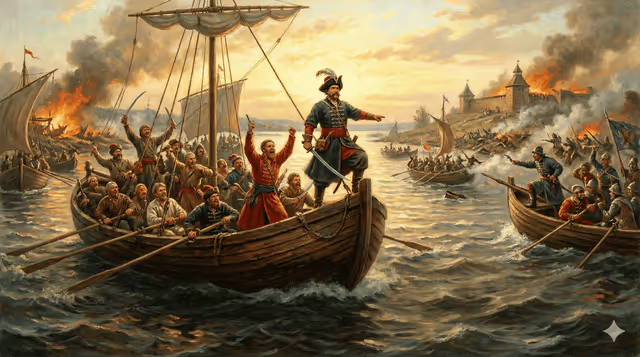
On 15 July 1240, the Swedes sailed up the Neva (Нева́) with an army commanded by the jarl Birger. They pitched camp at the mouth of the Izhora River (И́жора). Alexander had only his druzhina (дружи́на), his personal guard, and a few Novgorodian militias. There was no time to wait for reinforcements: he charged with three hundred men.
The attack came at dawn. The Swedes, overconfident, had posted no serious sentries. Alexander struck at the heart of the camp. The battle was brief and bloody. The prince, according to the Novgorod Chronicle, wounded Birger in the face with a lance. The Swedes fled to their ships, leaving their dead on the riverbank. Alexander earned his surname that day: Nevsky, “he of the Neva”.
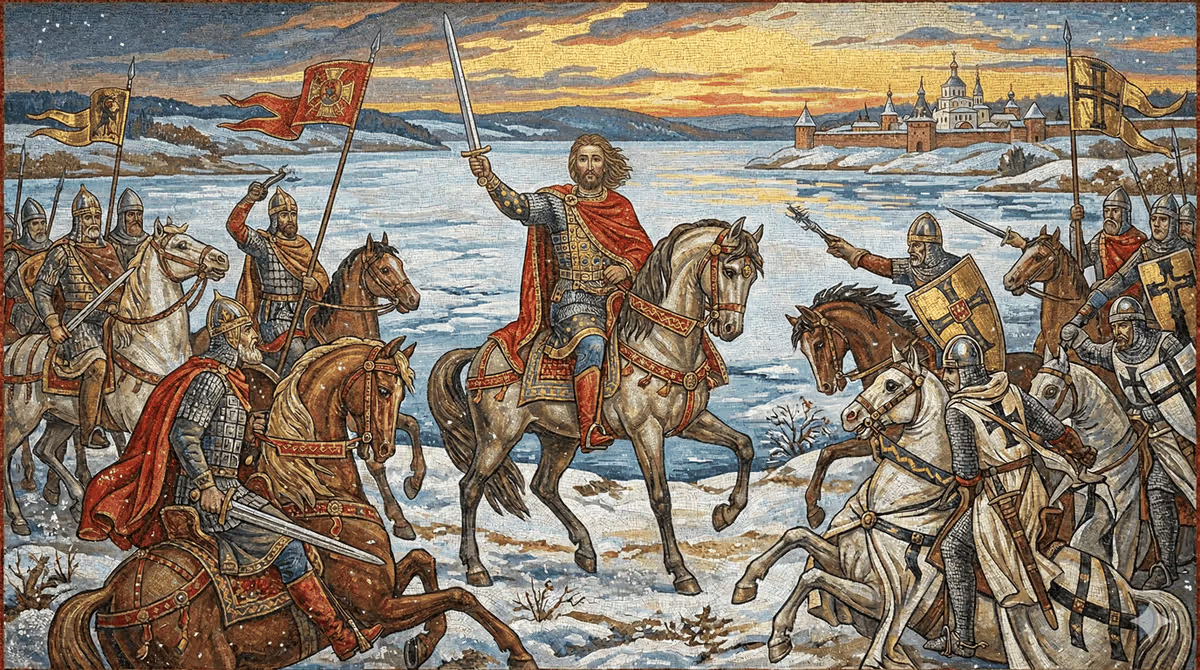
Two years later, a new threat from the west. The Teutonic Knights had taken Pskov, Novgorod’s sister city. In April 1242, Alexander confronted them on the frozen Lake Peipus (Чудско́е о́зеро). The “Battle on the Ice” became legendary: heavily armoured knights sank through the broken ice and drowned. In reality, the chronicles mention about twenty knights killed — a modest figure. But the symbol was powerful: Novgorod repelled the Latin West.
The strategic choice: why the Golden Horde?
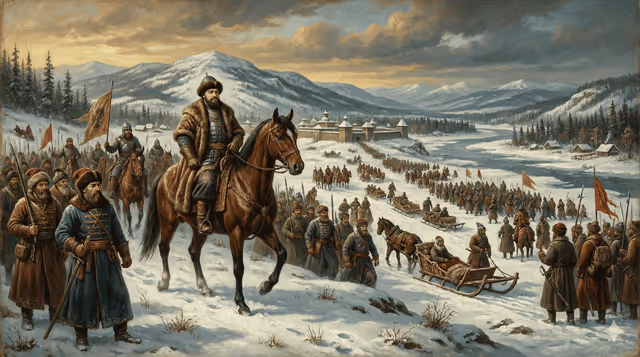
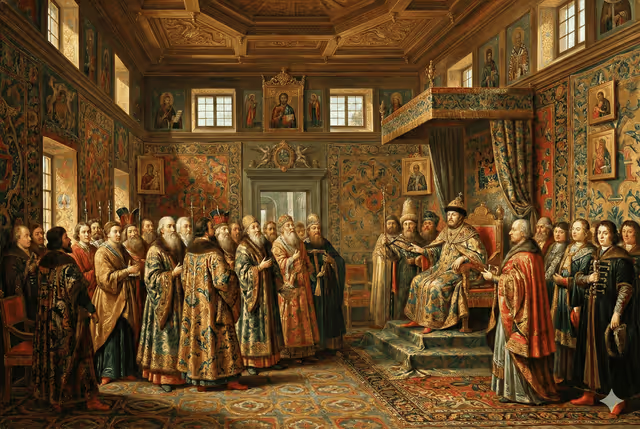
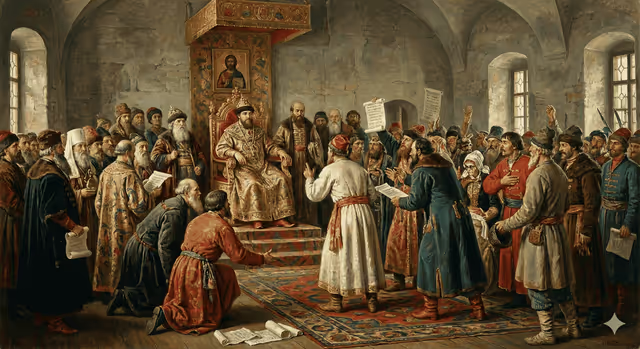
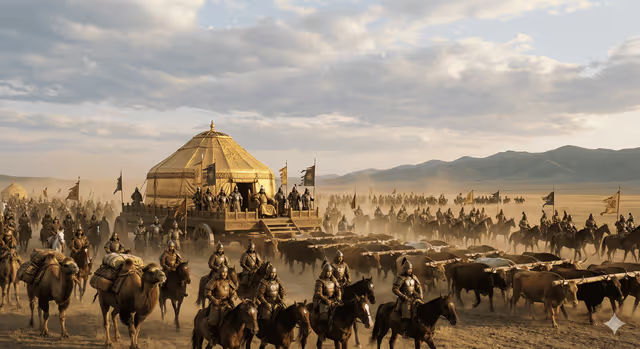
Between 1242 and 1252, Alexander Nevsky made four journeys to Sarai (Сара́й), the Golden Horde’s capital on the Volga. He made another to Karakorum (Каракору́м), the Mongol capital in Central Asia. Each time, he knelt, presented tributes, received the yarlyk (ярлы́к) — the authorisation to reign. His brother Andrew (Андре́й), Prince of Vladimir, refused this humiliation and attempted resistance. In 1252, a Mongol punitive expedition, the “Nevruyeva rati” (Невру́ева ра́ть), devastated the principality of Vladimir. Andrew fled to Sweden.
Alexander’s calculation was clear. The Mongols wanted money, not souls. They demanded tribute, census, political submission, but left the Orthodox Church intact. They even exempted the clergy from taxes — a remarkable pragmatism for conquerors. The Germanic and Swedish knights, on the other hand, came with bishops and missionaries. They built Latin cathedrals on the ruins of Orthodox churches. They imposed obedience to Rome, which meant, in the medieval mind, the destruction of Russian spiritual identity.
In 1257, the Mongols ordered a census in Novgorod to establish taxation. The city, proud of its freedoms, revolted. Alexander came personally to suppress the insurrection. He had the ringleaders blinded, others’ noses cut off. The brutality was calculated: better to punish a few rebels than let the Mongols raze the entire city. Novgorod paid its tribute. The city survived.
The Grand Prince of Vladimir: managing the occupation
In 1252, following Andrew’s flight, Alexander became Grand Prince of Vladimir (вели́кий князь Влади́мирский). His power was that of an intermediary: he collected tribute for the Horde, suppressed revolts, negotiated with the khans. In 1262, several Russian cities massacred Mongol tax collectors (баска́ки́). Alexander rushed to Sarai to calm Khan Berke (Берке́) and avoid a new punitive expedition. He negotiated for a year. The expedition was cancelled, but Alexander died on the return journey, exhausted, in November 1263. He was forty-three.
The chronicles report his last words: “My soul is troubled” (Смуща́ется душа́ моя́). A liturgical formula, or the confession of a man who had spent his life compromising with the enemy? Historians still debate. What is certain is that his policy worked: Novgorod and Vladimir survived the 13th century, unlike Kiev, which remained a field of ruins for generations.
The immediate legacy: two centuries of pragmatic collaboration
Alexander’s successors — his sons Dmitry (Дми́трий) and Andrew, then his grandson Ivan I Kalita (Ива́н Кали́та) — continued his policy of collaboration with the Horde. The system functioned according to an inexorable logic: whoever paid the most, flattered best, and denounced rivals most effectively obtained the yarlyk (ярлы́к) of grand prince. Moscow (Москва́), a minor city in the 13th century, grew precisely because its princes excelled in this art.
Ivan Kalita, nicknamed “the Purse” (калита́ meaning money purse), became in 1328 the Mongols’ chief tax collector. He gathered tribute from all the Russian principalities, keeping a share along the way, and thus built Muscovite power. When Tver (Тверь), a rival city, revolted in 1327 against a particularly brutal Mongol tax collector, Ivan rushed to Sarai and returned with a Tatar army. Together, they razed Tver. The khan rewarded Ivan by giving him Vladimir. Alexander Nevsky’s method had become a manual of government.
Ivan’s son, Simeon the Proud (Симео́н Го́рдый), reigned from 1340 to 1353 maintaining this approach. Then his brother Ivan II the Meek (Ива́н Кро́ткий) did likewise until 1359. The break began tentatively with Dmitry Donskoy (Дми́трий Донско́й), Ivan Kalita’s great-great-grandson. In 1380, he dared to confront the Mongol general Mamai (Мама́й) on the field of Kulikovo (Кулико́во по́ле). A brilliant victory, celebrated throughout Rus’. But two years later, Khan Tokhtamysh (Тохтамы́ш) marched on Moscow with a real army. Dmitry fled. The city was pillaged. Tribute resumed.
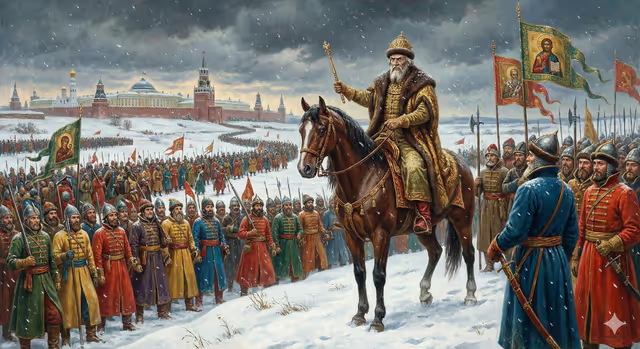
It was not until 1480 that the break became definitive. Ivan III (Ива́н Трéтий), Alexander Nevsky’s great-great-great-grandson, refused to bow before Khan Akhmat (Ахма́т). The two armies faced each other on opposite banks of the Ugra River (Угра́) for weeks. Then the Mongols withdrew without fighting. The Golden Horde was weakened, divided, incapable of imposing its will. The “Tatar yoke” (та́тарское и́го), as Russian chroniclers called it, ended after two hundred and forty years. Moscow was free, rich, united. Alexander Nevsky’s strategy — survive first, grow next, be free at last — had worked over the very long term.
The Orthodox Church never forgot that the Mongols had allowed it to preach freely for two hundred and fifty years. In 1547, when it canonised Alexander, it sanctified less a warrior than a protector of Orthodox faith against the Latin West. The victory on the Neva and the Battle on the Ice counted more, in ecclesiastical memory, than the multiple journeys to Sarai.
Conclusion: the pragmatism of a prince caught in a trap
Alexander Nevsky did not defeat the Mongols. He submitted to them methodically, brutally when his subjects refused to do so. His political genius lay in one intuition: in the medieval world, cultural and religious survival takes priority over political independence. The Mongols took money and left the soul. The Christian West wanted both. Faced with this choice, Nevsky decided. Novgorod survived. The Orthodox Church survived. Rus’, fragmented and vassal, made it through the 13th century. The price to pay — submission, tribute, humiliation — seemed bearable to subsequent generations, who made this collaborating prince a saint and a symbol of resistance. The paradox was never resolved.