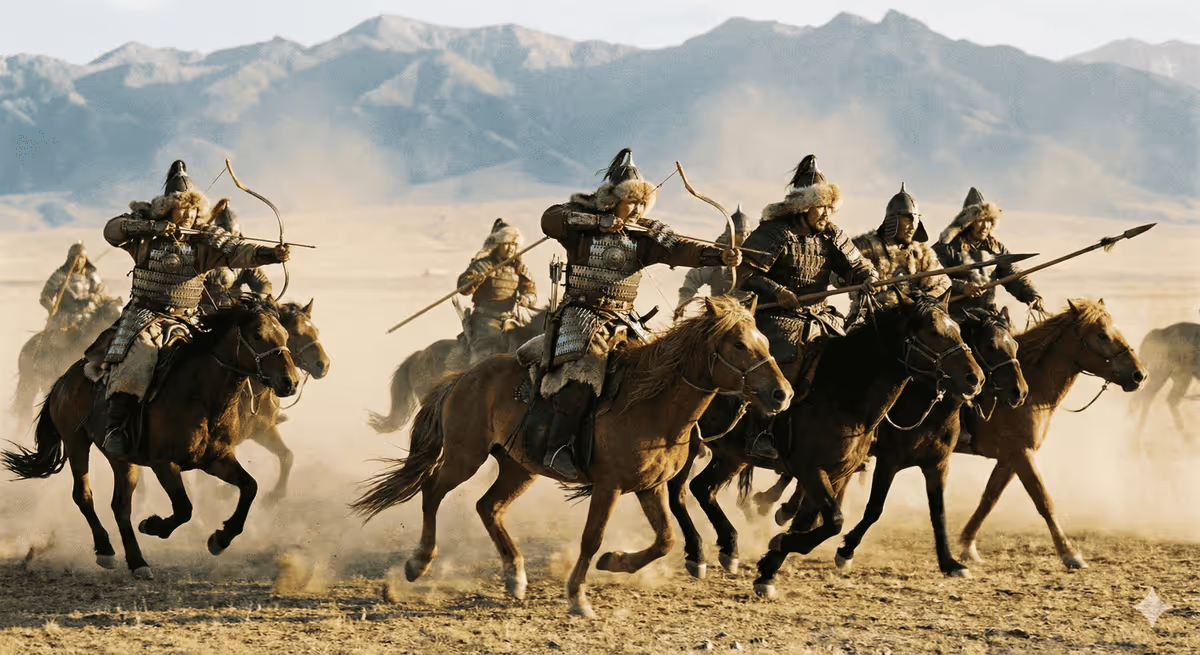
From Vikings to Mongols: the epic of medieval Rus'
In the 9th century, on the vast plains of Eastern Europe, a state was born that would flourish for four centuries: Kievan Rus’ (Русь).
Its princes forged alliances with every court in Europe, its merchants traded from the Baltic to Constantinople, and its cities rivalled the splendour of Western capitals. Then, in the 13th century, the Mongol invasion profoundly transformed this civilisation. A look back at a fascinating and little-known chapter of European history.
The Varangian origins of Rus’
The story begins in a surprising way, in the 9th century, on the immense rivers that cross the plains of Eastern Europe. According to the famous Primary Chronicle (Пове́сть временны́х лет), written by monks in the 12th century, the Slavic and Finno-Ugric tribes of the region lived in permanent chaos. Exhausted by their incessant quarrels, they reportedly made a bold decision: to call upon Scandinavian warrior-merchants, the Varangians, to restore order.
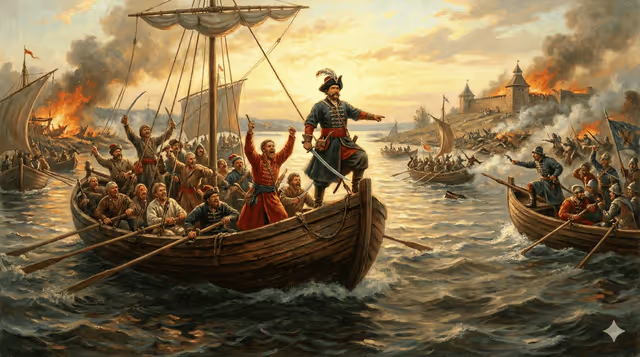
In 862, a Varangian chieftain named Rurik (Рю́рик) settled in Novgorod and founded a dynasty. Unlike the Viking raids that terrorised Western Europe, these northern warriors adopted a different strategy: they integrated with the local populations, married Slavic women and established a stable power. They quickly understood that true wealth lay not in plunder, but in organised trade.
Their great project was to secure the famous route “from the Varangians to the Greeks”, a gigantic river highway linking the cold Baltic Sea to wealthy Constantinople. In 882, Rurik’s successor, Prince Oleg (Оле́г), moved the centre of power southward to Kiev, ideally situated on the banks of the Dnieper. The city quickly became the “mother of Russian cities”, a commercial crossroads between the Scandinavian, Byzantine and Oriental worlds.
The reign of Yaroslav the Wise: Kiev in the 11th century
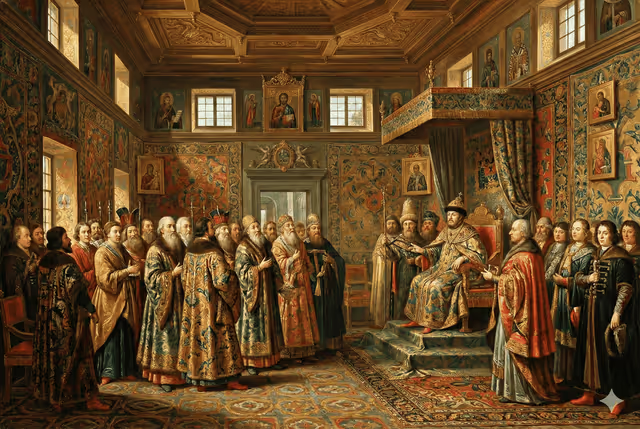
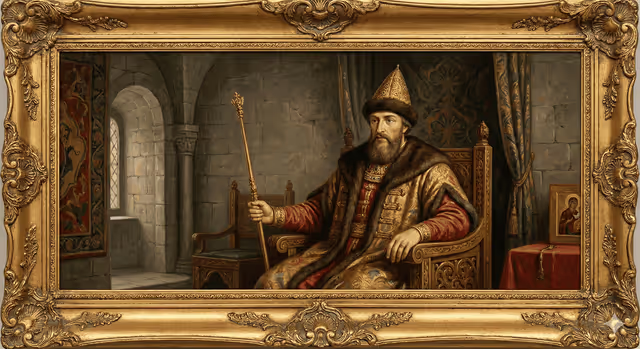
The 11th century marked the zenith of Kievan Rus’, particularly under the reign of Yaroslav the Wise (Яросла́в Му́дрый, 1019–1054). At that time, Kiev had nothing to envy the greatest European capitals — quite the contrary. Chroniclers of the era described a sumptuous city adorned with several hundred golden-domed churches, rich libraries and majestic palaces, ranking among the largest cities in Europe.
Yaroslav made his reign a cultural and legal golden age. He promulgated the Russian Justice (Ру́сская Пра́вда), the first written code of law in Rus’, regulating everything from fines for theft to inheritance rights. He commissioned the construction of the magnificent Saint Sophia Cathedral in Kiev (Софи́я Кие́вская), an architectural masterpiece designed to rival in beauty the Hagia Sophia in Constantinople.
But it is perhaps in diplomacy that Kiev’s prestige shone most brilliantly. The greatest rulers of Europe sought alliances with the prince’s family. His daughters became queens throughout Europe: Elizabeth (Елизаве́та) married King Harald III of Norway, Anastasia (Анастаси́я) became Queen of Hungary. The most celebrated example for the English-speaking world is Anne of Kyiv (Анна Яросла́вна), who married King Henry I of France in 1051.
Historians tell us that Anne arrived at the French court with a culture far superior to that of her new entourage: she could read and write (unlike her husband!), signed official documents in Cyrillic script, and even introduced the name “Philip” to the French court — her son would become Philip I.
Novgorod: a merchant republic in the north
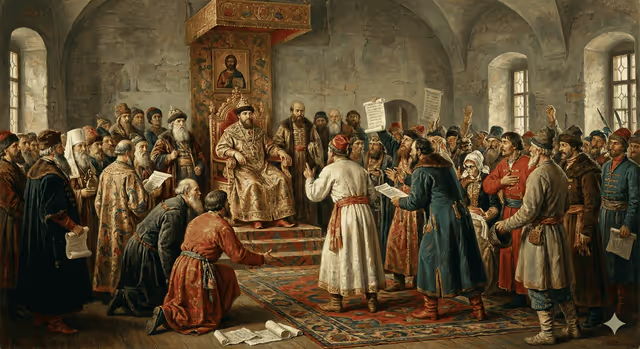
While Kiev shone under its princes’ authority, another city followed a radically different political path: Novgorod the Great. This northern city invented a unique form of government in medieval Europe: a true merchant republic where power belonged not exclusively to the prince, but also to the veche (ве́че), a popular assembly gathering free citizens.
The veche held extraordinary powers for the time: it could elect or dismiss the prince, decide on war or peace, and try major crimes. The prince was in reality no more than a hired military commander, often from another city. If he displeased the assembly, he was dismissed without ceremony: “Be gone, prince, we want you no more!”
Novgorod’s prosperity rested on trade. A member of the powerful German Hanseatic League, it exported precious furs, honey, wax and timber to the West. In return, it imported Flemish cloth, salt and metals.
But what fascinates historians most is the exceptional level of education in this society. Archaeologists have discovered in Novgorod more than a thousand letters written on birch bark, documents dating from the 11th to the 15th century. They contain everything: love letters, schoolchildren’s exercises, commercial contracts, shopping lists, complaints between neighbours… These finds prove that in Novgorod, even craftsmen and women could read and write — an exceptional situation for the era, including in Western Europe.
The Mongol invasion of 1237–1240
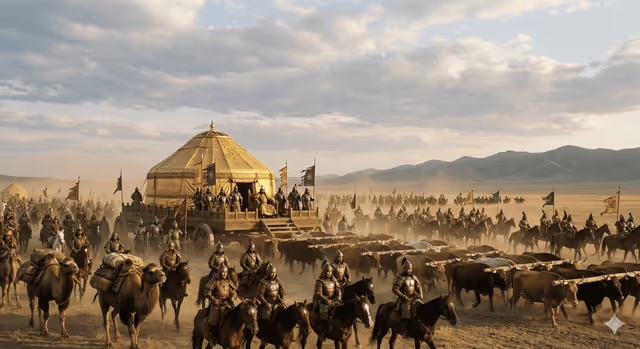
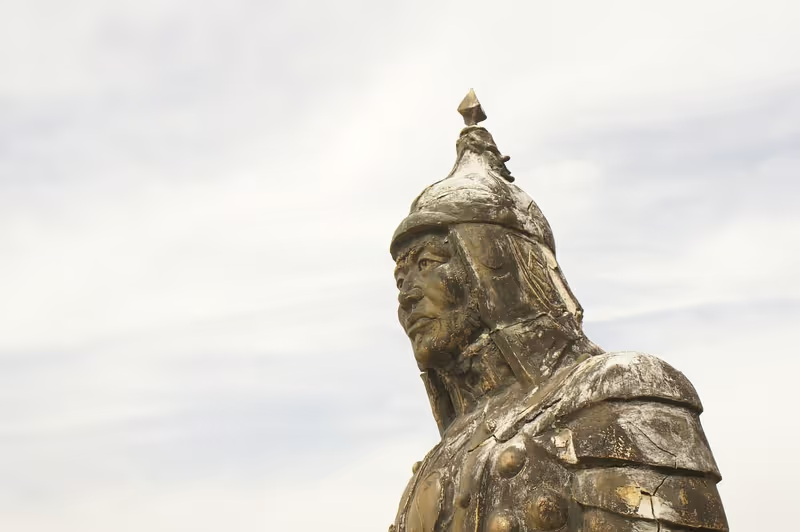
And then, everything collapsed. In 1237, a hurricane of iron and fire swept over Rus’. Batu Khan (Баты́й-ха́н), grandson of the fearsome Genghis Khan, launched the Golden Horde (Золота́я Орда́) on the conquest of Eastern Europe. The Russian principalities, weakened by internal divisions and dynastic quarrels, fell one after another like dominoes.
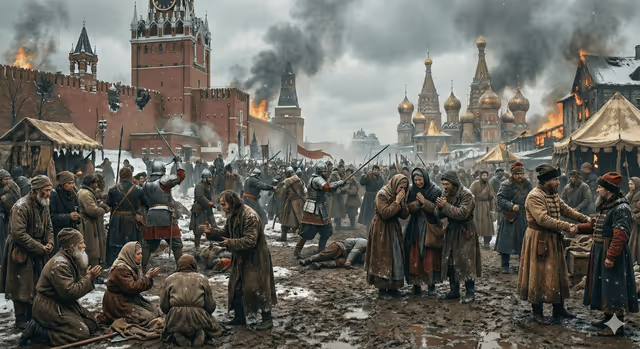
In December 1237, the city of Ryazan was the first to fall after a five-day siege. The city was entirely destroyed, its population massacred. Then it was the turn of Moscow, still a modest town, and Vladimir, capital of the most powerful principality, which burned in February 1238. The Russian army, courageous as it was, could do nothing against the mobility and military organisation of the Mongols.
In 1240, it was Kiev’s turn — the very symbol of Russian civilisation. After a terrible siege, the city fell. Chroniclers report that the population was almost entirely massacred or enslaved. The splendid Saint Sophia Cathedral miraculously survived, but the once-resplendent city was nothing but a field of smouldering ruins.
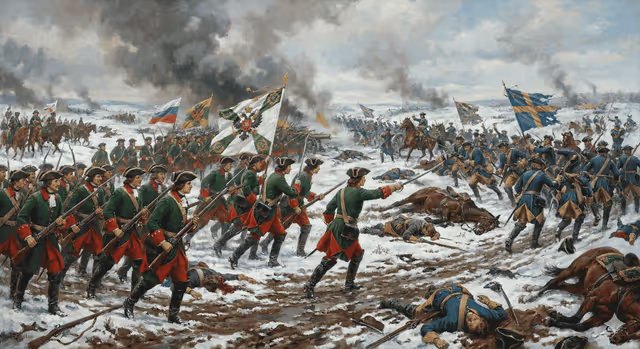
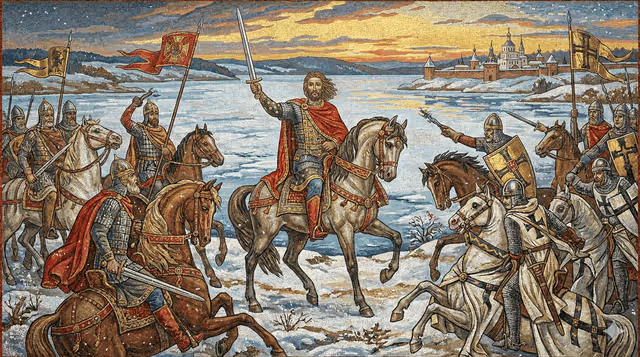
Only one major city escaped destruction: Novgorod. Too far north, protected by its marshes and the Russian winter, it negotiated its submission without fighting. Its young prince, Alexander Nevsky (Алекса́ндр Не́вский), became a complex and controversial figure: a national hero for having defeated the Swedes on the Neva (Нева́) in 1240 and the Teutonic Knights on the frozen Lake Peipus in 1242, he was also the man who accepted becoming a vassal of the Mongols to preserve his city. A pragmatic choice that would save Novgorod.
The period of Mongol vassalage (1240–1480)
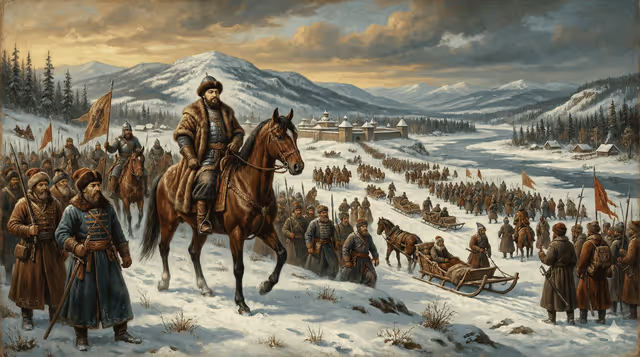
For more than two centuries, from 1240 to 1480, the Russian principalities lived under the Mongol yoke. Unlike other conquered regions, Rus’ was not physically occupied: the Mongols preferred a system of indirect vassalage. But Russian princes had to regularly make the journey to Sarai (Сара́й), the Horde’s capital on the Volga, to receive a yarlyk (ярлы́к), the official authorisation to reign granted by the Khan. They also had to pay a crushing annual tribute, the vykhod (вы́ход), collected by Mongol officials.
This period tragically cut Rus’ off from Western Europe at the precise moment when it was undergoing its greatest upheavals: the Italian Renaissance, Gothic cathedrals, universities, the rise of cities… All this cultural ferment happened without the Russians, isolated in the East.
But the Mongol yoke also profoundly transformed Russian society. The political system became more authoritarian, modelled on the Mongol example. Princes learned to rule with an iron hand. And above all, a formerly insignificant small village cleverly took advantage of the situation: Moscow.
The princes of Moscow made themselves faithful tax collectors on behalf of the Mongols, accumulating power and wealth in the process. In 1380, Prince Dmitry Donskoy won a major symbolic victory at the Battle of Kulikovo (Кулико́во по́ле), proving that the Mongols were not invincible. But it took another century for definitive liberation.
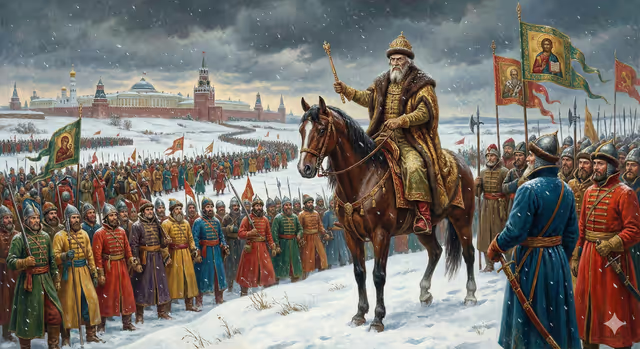
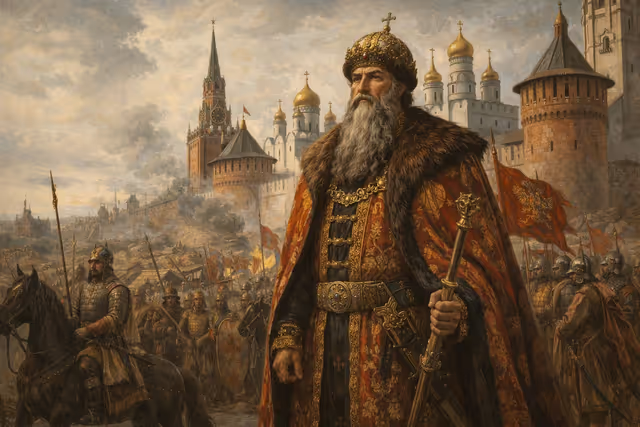
In 1480, Ivan III, known as “the Great”, put an end to more than two centuries of domination during the famous “Great Stand on the Ugra River”. The two armies faced each other for weeks, then the Mongols, weakened by their own internal divisions, withdrew without fighting. Rus’ was finally free.